Robotic surgery is one of the most interesting developments in modern medical science. It combines medical knowledge, advanced machines, computer technology, and the skills of trained surgeons. In simple terms, robotic surgery allows a doctor to perform certain operations with the assistance of a robotic system.
The word “robotic” can sometimes create the wrong impression that a robot performs an operation on its own. In reality, the surgeon remains in control throughout the procedure. The robotic system acts as an advanced surgical tool that helps the surgeon perform controlled and precise movements.
As modern medicine continues to develop, robotic surgery has become increasingly important. It can provide surgeons with better visualization, controlled instrument movement, and support during selected minimally invasive procedures. However, it is not suitable for every patient or every type of operation.
What Is Robotic Surgery?
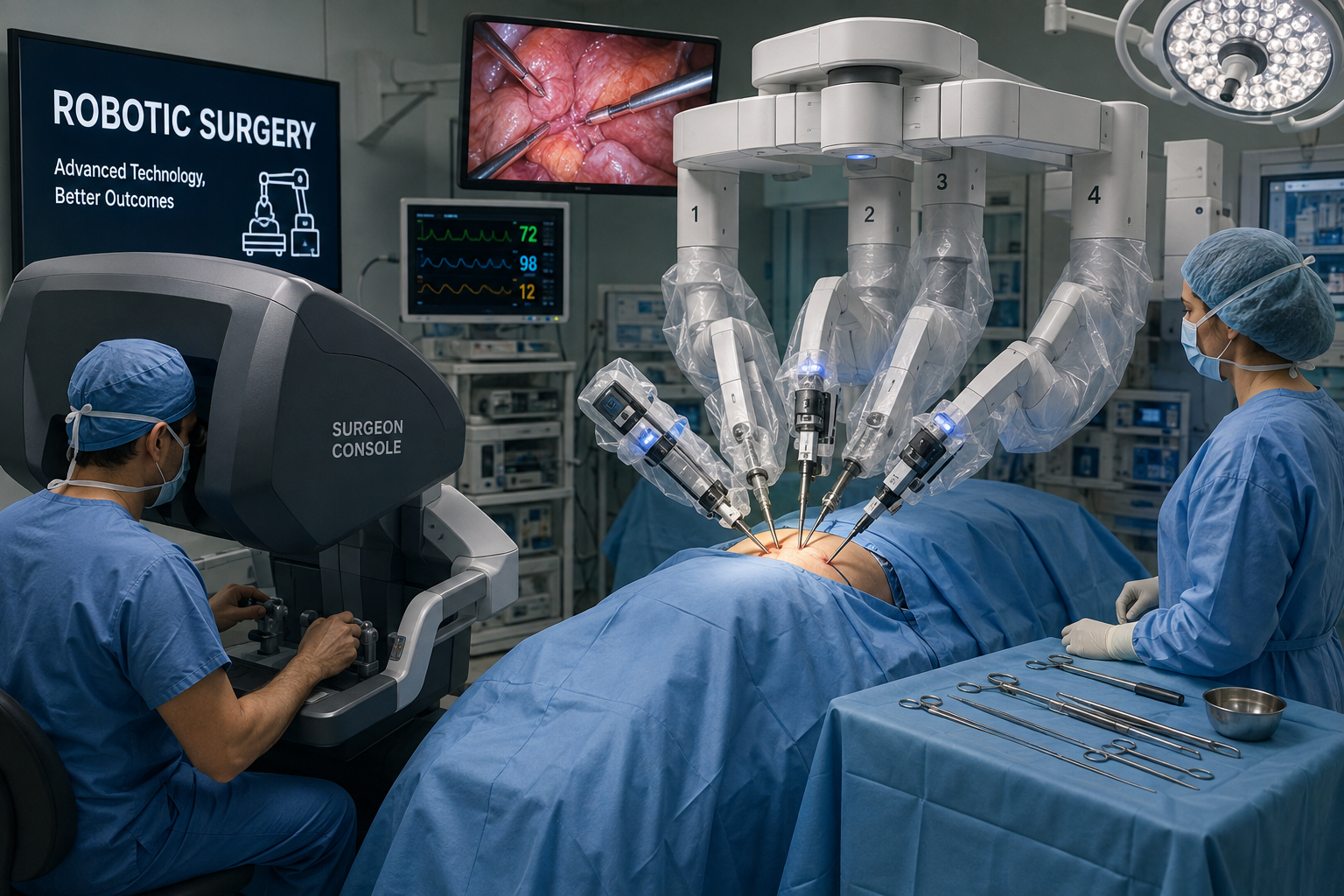
Robotic surgery is a surgical technique in which specially designed robotic instruments are controlled by a trained surgeon. A typical robotic surgical system includes a surgeon’s console, robotic arms, a camera, and different surgical instruments.
The surgeon sits at the console and controls the instruments using hand movements. The robotic arms respond to the surgeon’s commands and move the instruments inside the patient’s body. At the same time, a camera provides a detailed view of the surgical area.
The main purpose of robotic surgery is to provide surgeons with additional control and precision during selected procedures. The technology does not replace the surgeon. Instead, it provides advanced tools that can support the surgeon’s skills and make certain procedures easier to perform.
How Does Robotic Surgery Work?
The process begins with the surgeon and medical team preparing the patient for the operation. After anesthesia is given, the surgeon may make several small openings when a minimally invasive approach is appropriate.
The robotic instruments are placed through these openings, while a camera provides a magnified view of the area being treated. The surgeon then controls the robotic system from the console. When the surgeon moves the controls, the robotic instruments respond to those movements.
This system can allow the surgeon to make carefully controlled movements in areas where space may be limited. The surgeon remains responsible for deciding what needs to be done and how the instruments should be used.
An important point about robotic surgery is that the robotic system does not normally make independent medical decisions. Human judgment remains at the center of the operation.
Main Components of a Robotic Surgical System
A robotic surgical system contains several important components that work together during an operation. The surgeon’s console allows the doctor to control the system and view the surgical area. It provides the surgeon with detailed visual information while the procedure is taking place.
The robotic arms hold and move specialized surgical instruments according to the surgeon’s commands. These instruments can be changed depending on the procedure being performed.
A small camera provides a magnified view of the treatment area. This can help the surgeon see small structures more clearly. Different surgical instruments can also be attached to the robotic arms for cutting, holding, stitching, and other surgical tasks.
| Component | Main Function |
|---|---|
| Surgeon Console | Allows the surgeon to control the robotic system |
| Robotic Arms | Hold and move surgical instruments |
| Camera | Provides a detailed and magnified view |
| Surgical Instruments | Perform different surgical tasks |
| Computer System | Connects the surgeon’s movements with the robotic instruments |
Together, these components allow the surgeon to use the robotic system as an advanced surgical tool while maintaining control over the procedure.
Why Was Robotic Surgery Developed?
Traditional surgery has helped millions of patients, but some procedures can be difficult because surgeons may have limited space or visibility. Robotic surgery was developed to provide additional control and improved visualization during selected procedures.
The technology can be particularly useful when surgeons need to work in small or complicated areas of the body. The robotic system can provide controlled instrument movement and detailed images that may assist the surgeon.
However, robotic surgery is not designed to completely replace traditional surgery. It is another option that doctors can consider when it is appropriate for a particular patient and procedure.
Precision in Robotic Surgery
One of the major features of robotic surgery is controlled instrument movement. Human hands are extremely capable, but they naturally have physical limitations. Robotic instruments can assist surgeons with small and controlled movements during certain procedures.
This can be helpful when accuracy is especially important. The system may allow the surgeon to work carefully in areas where precise movements are required.
However, greater precision does not mean that complications are impossible. Every surgical procedure involves risks, and the final result depends on several factors, including the patient’s health, the type of operation, and the experience of the medical team.
Improved Visualization
Another important feature of robotic surgery is its camera system. During some procedures, the surgeon can see a magnified and detailed image of the surgical area.
Better visualization may help the surgeon identify small structures and understand the treatment area more clearly. This can be particularly useful when working in complicated or confined parts of the body.
The combination of detailed visualization and controlled instruments is one reason why robotic technology has become useful in selected surgical procedures.
Smaller Incisions
Many robotic surgery procedures use a minimally invasive approach. Instead of making one large opening, the surgeon may use several smaller openings to access the treatment area.
Smaller incisions can provide potential benefits for some patients, including smaller wounds and less discomfort after surgery. They may also make the recovery process easier in certain situations.
However, the benefits depend on the procedure, the patient’s condition, and the surgeon’s approach. Smaller incisions do not automatically mean that every patient will have the same recovery experience.
Faster Recovery
Some patients who undergo minimally invasive robotic procedures may return to their normal activities relatively quickly. A smaller surgical wound can sometimes make recovery easier, and some patients may experience less postoperative discomfort.
However, robotic surgery does not guarantee a faster recovery in every situation. Different operations have different levels of complexity, and recovery depends on the patient’s overall health and the type of procedure performed.
Doctors therefore consider several factors before recommending a particular surgical approach.
Where Is Robotic Surgery Used?
Robotic surgery is used in several areas of medicine. It can be considered for selected urological, gynecological, general, colorectal, heart, cancer-related, and head and neck procedures.
The technology may be useful when surgeons need controlled movements and detailed visualization in a particular area of the body. However, not every procedure requires robotic assistance.
Doctors decide whether robotic surgery is suitable by considering the patient’s condition, the required operation, possible risks, and available alternatives.
Robotic Surgery in Cancer Treatment
Robotic systems can be used during some operations involving cancer. In these procedures, the goal may be to remove affected tissue while carefully working around important structures.
The detailed visualization and controlled instrument movements offered by robotic surgery may help surgeons during selected cancer-related operations.
However, robotic surgery itself is not a cure for cancer. Treatment depends on the type and stage of cancer and may include surgery, medicines, radiation, or a combination of different treatments.
The most appropriate treatment plan should always be determined by qualified healthcare professionals.
Robotic Surgery vs Traditional Surgery
Traditional open surgery and robotic surgery are different approaches. Open surgery may require a larger incision to provide direct access to the treatment area.
Minimally invasive surgery generally uses smaller openings and specialized instruments. Robotic surgery can be considered an advanced form of minimally invasive surgery in many cases because the instruments are controlled through a robotic system.
There is no single surgical method that is best for every patient. Doctors consider the patient’s medical condition, the complexity of the procedure, potential risks, and expected benefits before choosing an approach.
Is the Robot the Doctor?
No. This is one of the most important things people should understand about robotic surgery.
The robot does not normally decide how an operation should be performed. The surgeon remains responsible for the procedure and controls the robotic instruments.
The surgeon also makes important medical decisions throughout the operation. The robotic system should therefore be understood as an advanced surgical tool rather than an independent doctor.
This human-controlled approach is an important part of understanding how robotic surgery works.
Benefits for Surgeons
Robotic surgery can provide surgeons with several useful features. These include detailed visualization, controlled instrument movement, flexible instruments, and improved access to certain areas of the body.
The system can also provide an ergonomic working position for the surgeon. These features may make some procedures more manageable and provide additional control during selected operations.
However, technology works alongside the surgeon’s medical knowledge and experience. Advanced equipment cannot replace professional judgment or proper surgical training.
Benefits for Patients
Depending on the procedure, patients may experience potential benefits from robotic surgery. These can include smaller incisions, less damage to surrounding tissues in some procedures, reduced blood loss in certain operations, less postoperative discomfort, shorter hospital stays, and a potentially quicker return to normal activities.
These benefits are not guaranteed for every patient. Results depend on the specific procedure, the patient’s health, the surgeon’s experience, and other medical factors.
Patients should discuss the expected benefits and possible risks with their healthcare provider before choosing a surgical approach.
Limitations of Robotic Surgery
Despite its advantages, robotic surgery also has limitations. Robotic systems can be expensive to purchase, operate, and maintain. Hospitals need trained surgeons, nurses, technicians, and other healthcare professionals who understand the technology.
Not every hospital has access to advanced robotic systems. In addition, robotic technology cannot be used for every type of operation.
In some situations, traditional surgery or another minimally invasive approach may be more appropriate. The choice should always be based on the patient’s medical needs rather than the availability of advanced technology alone.
Cost of Robotic Surgery
Cost is one of the major challenges associated with robotic surgery. Robotic systems require advanced equipment, regular maintenance, technical support, and professional training.
Because of these expenses, some robotic procedures may cost more than certain traditional procedures. This creates an important challenge for healthcare systems that want to provide advanced medical technology while keeping treatment affordable.
As technology develops and becomes more widely adopted, costs may change. However, affordability and accessibility will remain important issues for hospitals and healthcare providers.
Training of Surgeons
A robotic surgical system is only useful when it is operated by properly trained professionals. Surgeons need to understand how the system works, how to control its instruments, and how to respond to unexpected situations.
Training can include simulation, supervised procedures, and practical experience. The skills of the surgeon and the entire medical team remain an important part of patient safety.
Advanced equipment cannot replace proper training. Successful robotic surgery requires both technology and human expertise.
Risks of Robotic Surgery
Robotic surgery is still surgery, so it carries medical risks. Possible complications can include bleeding, infection, problems related to anesthesia, injury to nearby structures, and other surgical complications.
Technical problems with equipment are also possible, although hospitals have procedures designed to manage unexpected situations.
Patients should discuss the possible benefits, risks, alternatives, and expected recovery process with their healthcare provider before deciding on a surgical method.
Understanding the limitations of robotic surgery is just as important as understanding its potential advantages.
Artificial Intelligence and Robotic Surgery
Artificial intelligence is becoming increasingly important in modern healthcare. In the future, AI may assist doctors with surgical planning, medical image analysis, and decision support.
Combining artificial intelligence with robotic surgery could make some surgical systems even more advanced. Computer technology may help doctors analyze information and prepare for complicated procedures.
However, human judgment will remain extremely important. Medical decisions involve experience, ethics, communication, and an understanding of the individual patient’s needs.
AI and robotics should therefore support medical professionals rather than remove human responsibility from healthcare.
The Future of Robotic Surgery
The future of robotic surgery looks promising. Researchers are working on smaller instruments, improved cameras, better robotic systems, and smarter computer technology.
Future systems may become easier to use and potentially more widely available. Technology could also make it easier for surgeons in different locations to collaborate and share expertise.
As robotic systems improve, they may become useful in an increasing number of surgical procedures. However, future development should not focus only on making robotic systems more advanced. Safety, affordability, accessibility, proper training, and patient needs should remain equally important.
Robotic Surgery in Developing Countries
Developing countries face particular challenges when adopting advanced medical technology. The cost of equipment, maintenance, training, and hospital infrastructure can be high.
Many hospitals may still need to prioritize basic healthcare services before investing heavily in expensive robotic systems. This can make access to robotic surgery uneven between different regions.
As technology becomes more affordable and healthcare infrastructure improves, robotic procedures may eventually become accessible to a larger number of hospitals and patients.
Making advanced medical technology available more widely could be an important part of the future development of robotic surgery.
Ethical Issues in Robotic Surgery
Robotic surgery also raises important ethical questions. Patients should understand what type of procedure they are receiving and what risks and alternatives are available.
Doctors should clearly explain the expected benefits and limitations of the technology. Patients should also have an opportunity to ask questions before making treatment decisions.
Another concern is healthcare inequality. Advanced technology should not create unfair differences between patients who can afford expensive treatment and those who cannot.
Privacy and data security are also important because modern robotic systems depend heavily on computer technology. Healthcare providers must take appropriate steps to protect patient information.
Advantages and Limitations at a Glance
| Advantages of Robotic Surgery | Limitations of Robotic Surgery |
|---|---|
| Controlled instrument movements | High equipment cost |
| Detailed visualization | Specialized training required |
| Precise movements during selected procedures | Not suitable for every operation |
| Smaller incisions in many minimally invasive procedures | Not available in every hospital |
| Potentially less blood loss in some operations | Maintenance can be expensive |
| Possible easier recovery for some patients | Surgery still carries medical risks |
| Useful for selected complex procedures | Requires trained medical teams |
Importance in Modern Medical Science
Robotic surgery represents an important connection between medicine and technology. In the past, surgeons mainly depended on their hands, eyes, and traditional surgical instruments. Today, advanced cameras, computers, and robotic systems can provide additional support during selected operations.
This development demonstrates how technology can improve the tools available to medical professionals. At the same time, it shows that advanced equipment is most valuable when combined with human knowledge, experience, responsibility, and patient-centered care.
The development of robotic surgery also reflects a larger change in modern medicine. Healthcare is increasingly using technology to support doctors, improve information access, and create new treatment possibilities.
Conclusion
Robotic surgery is an important development in modern medical science. It provides surgeons with advanced tools that can offer controlled movements, detailed visualization, and support during selected minimally invasive procedures.
One of the most important facts about robotic surgery is that the surgeon remains in control. The robot does not normally operate independently. Instead, it works as a sophisticated system that supports the surgeon during the procedure.
The technology has several potential advantages, including smaller incisions, detailed visualization, and controlled instrument handling. However, it also has limitations, including high costs, specialized training requirements, limited availability, and the normal risks associated with surgery.
As robotics, computer science, and artificial intelligence continue to develop, robotic surgery may become even more advanced. Its future success will depend not only on better technology but also on responsible use, proper training, patient safety, affordability, and equal access to healthcare.
Ultimately, the real strength of robotic surgery is not the robot alone. It is the combination of advanced technology and human medical expertise. When these two work together properly, they can create new possibilities for modern healthcare.