When people want to lose weight, improve metabolic health, or become more active, they often think the answer is a longer workout. A gym membership, a 45-minute treadmill session, or an intense evening workout can certainly support fitness, but these activities represent only one part of your daily energy expenditure. NEAT Fitness, which stands for Non-Exercise Activity Thermogenesis, focuses on the movement you perform throughout the day outside structured exercise. Walking, standing, cleaning, cooking, climbing stairs, shopping, and even small movements such as fidgeting can all contribute to NEAT Fitness and influence how much energy your body uses every day.
Understanding NEAT Fitness can change the way you think about metabolism. Instead of focusing only on what happens during a workout, it encourages you to look at the other 23 hours of your day. For people who spend most of their working hours sitting, increasing everyday movement can be a practical way to become more active without adding another demanding workout to an already busy schedule.
What Is NEAT Fitness and Why Does It Matter?
NEAT Fitness describes the energy your body uses for physical activities that are not planned exercise, sleeping, eating, or sports. It includes movements that naturally happen as you go through your daily routine. Walking to another room, standing while working, doing household chores, carrying groceries, gardening, taking the stairs, and moving around while talking on the phone are all examples of non-exercise activity.
The importance of NEAT comes from its cumulative effect. A single short walk may not seem significant, but repeated movements throughout an entire day can add up. Someone who frequently stands, walks, and changes position may use considerably more energy than someone who remains seated for most of the day.
This does not mean NEAT replaces exercise. Structured exercise remains valuable for cardiovascular fitness, strength, mobility, and overall health. Instead, NEAT Fitness complements exercise by filling the movement gap between workouts.
How NEAT Fitness Supports Daily Metabolism
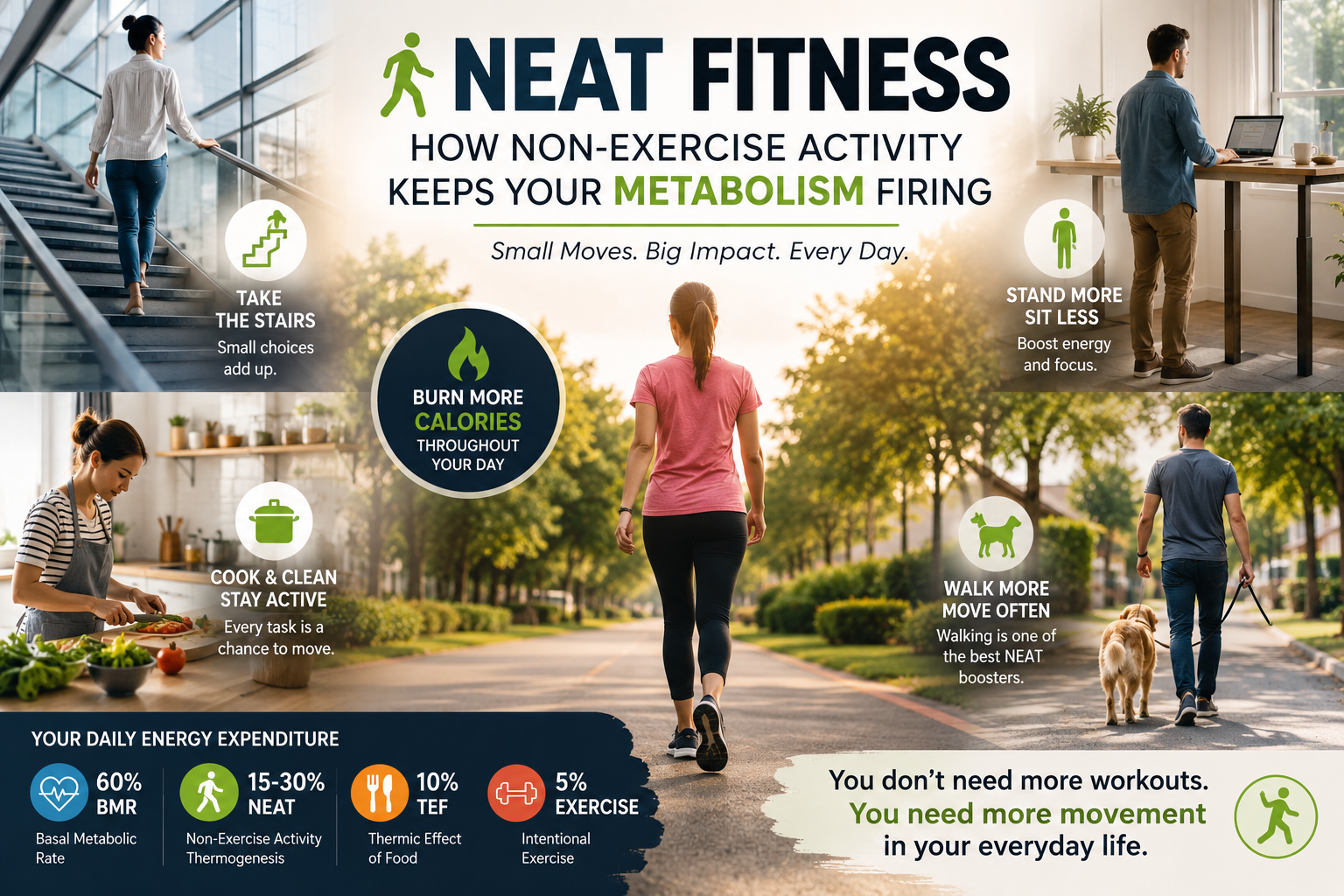
Your total daily energy expenditure is influenced by several different components. Basal metabolic rate accounts for the energy your body needs to maintain essential functions such as breathing, circulation, temperature regulation, and cellular activity. The thermic effect of food represents the energy used to digest and process food. Planned physical activity contributes another portion, while NEAT can vary considerably depending on how active your lifestyle is.
| Component of Daily Energy Expenditure | Approximate Contribution |
|---|---|
| Basal Metabolic Rate (BMR) | 60–70% |
| NEAT | 15–30%* |
| Thermic Effect of Food (TEF) | Around 10% |
| Intentional Exercise | Often around 5% |
*NEAT varies substantially between individuals and lifestyles, so these figures are general estimates rather than fixed percentages.
This is why NEAT Fitness deserves attention. Intentional exercise may take less than an hour, while everyday movement occurs across the entire waking day. Increasing movement during work, household activities, transportation, and leisure can therefore influence total daily energy expenditure.
NEAT Fitness and the “Active Couch Potato” Problem
One interesting phenomenon is the “active couch potato” lifestyle. A person may complete a workout every morning but then spend most of the remaining day sitting at a desk, driving, watching television, or using a computer.
For example, imagine someone exercises for 45 minutes before work and then sits at a desk for eight hours. After work, they drive home and spend several more hours sitting. Although that person is technically exercising, their overall daily movement may still be low.
NEAT Fitness provides another way to approach this problem. Instead of relying entirely on one workout, the goal is to create more movement opportunities throughout the day. Short walks, standing breaks, household tasks, and active transportation can make an otherwise sedentary routine more dynamic.
The important idea is not that sitting for a certain number of hours automatically cancels out exercise. Rather, regular movement and structured exercise serve different purposes, and a healthy lifestyle can benefit from both.
Why Small Movements Can Add Up
One of the most useful aspects of NEAT Fitness is that it does not require every movement to feel like a workout. You do not have to sweat, lift heavy weights, or reach a specific heart-rate zone for everyday activity to count as movement.
Consider a normal working day. You might walk from your desk to a meeting room, climb a staircase, prepare lunch, walk to the kitchen several times, shop for groceries, clean your home, and take an evening walk. None of these activities may look like traditional exercise, but together they create additional physical activity.
This cumulative effect is particularly useful because small habits are often easier to maintain than dramatic lifestyle changes. Instead of trying to add another hour at the gym, you can look for opportunities to move during activities you already perform.
NEAT Fitness for People Who Work at a Desk
Modern office life makes NEAT Fitness especially relevant. Many jobs require people to sit in front of computers for several hours. Even when a person exercises regularly, long periods of uninterrupted sitting can create a very low-movement routine.
One simple strategy is to introduce movement into the workday. Standing during some phone calls, walking while listening to an audio meeting, using stairs instead of elevators, or taking short walking breaks can make the day more active.
A standing desk can also encourage position changes, although standing should not be treated as a magical replacement for walking or exercise. The bigger goal is to avoid staying in one position for too long.
The best approach is to alternate between sitting, standing, walking, and other comfortable movements throughout the day.
NEAT Fitness and Walking Habits
Walking is one of the easiest ways to increase NEAT Fitness because it requires little equipment and can be incorporated into ordinary routines.
Instead of looking at walking only as a formal workout, think about how you can use walking as transportation and transition. Walking to a nearby store, taking a longer route through the building, parking farther away when appropriate, or taking a short walk after a meal can increase daily movement.
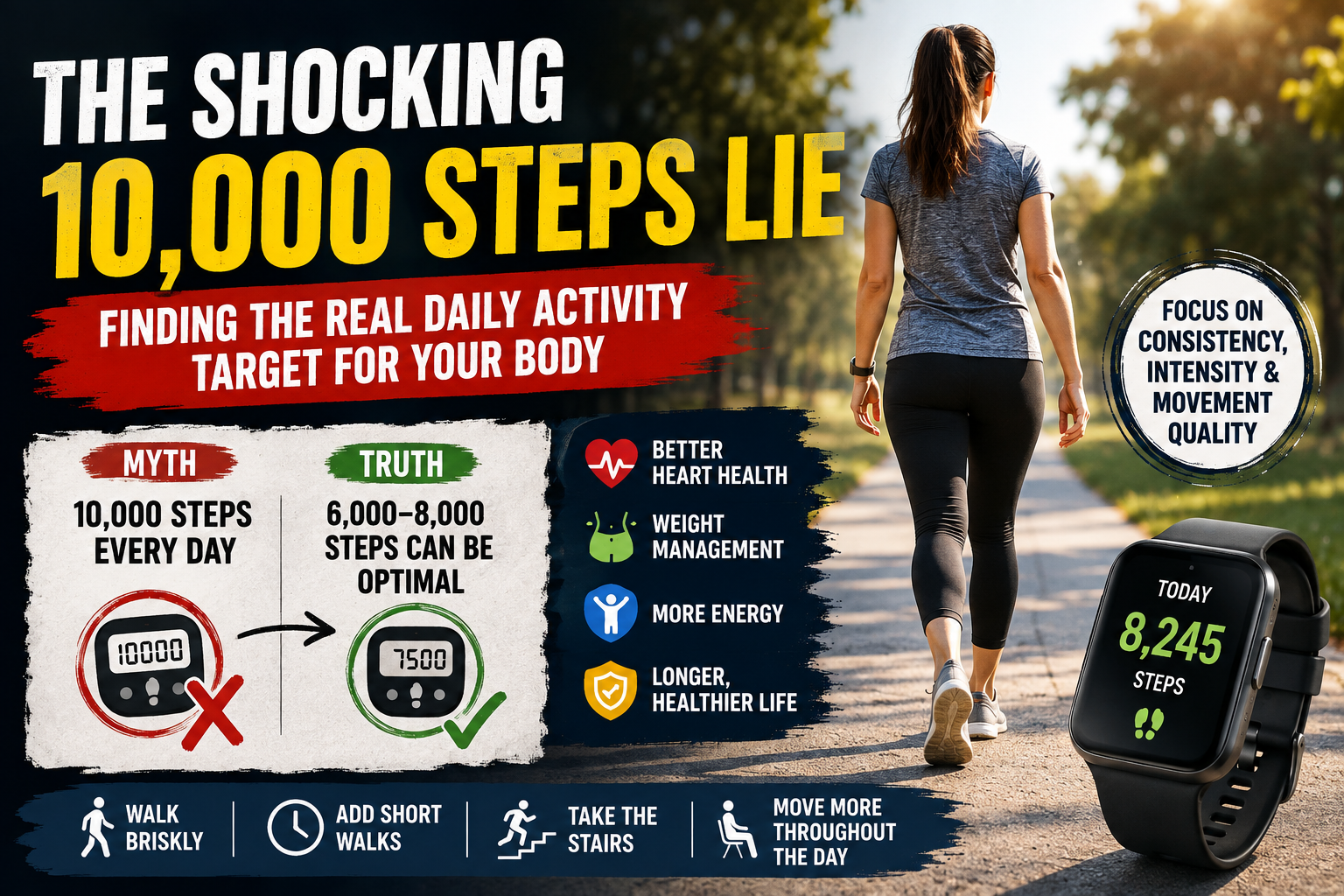
You can also divide walking into several small sessions. A five-minute walk in the morning, another during lunch, and another in the evening may feel much easier than trying to schedule one long session.
The advantage is consistency. A movement habit that fits naturally into your day is often easier to maintain than a routine that depends on finding a large block of free time.
NEAT Fitness and Household Activities
Household activities are another overlooked source of movement. Cleaning, cooking, organizing rooms, gardening, washing dishes, doing laundry, and carrying household items all require physical movement.
These tasks may not feel like formal workouts, but they keep your body moving. When performed regularly, they can contribute to your overall activity level.
This is one reason NEAT Fitness is useful for people who dislike traditional gym workouts. You can increase daily movement without turning every activity into an exercise session. The focus is simply on becoming less sedentary and more physically engaged with your environment.
NEAT Fitness and the Workplace
The workplace can provide dozens of opportunities for additional movement. Instead of sending a message to a colleague who sits nearby, you can walk over when practical. You can use the stairs for one or two floors, stand during a phone conversation, or take a brief walking break between tasks.
These habits do not need to disrupt productivity. In many cases, movement can be connected directly to activities you already perform.
For remote workers, the same principle applies. Walking around the room during a phone call, standing while reading certain messages, or taking short movement breaks between projects can prevent the workday from becoming one long sitting session.
How to Increase NEAT Fitness Without a Gym
Increasing NEAT Fitness does not require an expensive fitness tracker, gym membership, or complicated program. Start by observing your normal day. Identify the periods when you sit for the longest and look for realistic opportunities to move.
You could walk while making phone calls, choose stairs when comfortable, perform household chores more actively, take short movement breaks, or walk to nearby destinations instead of driving when practical.
Another useful strategy is to make movement convenient. Keep frequently used items slightly farther away rather than arranging everything within arm’s reach. Use natural transitions, such as walking after finishing a work task or moving around while waiting for something to cook.
The goal is not to make daily life exhausting. The goal is to make movement a normal part of daily life.
NEAT Fitness and Weight Management
NEAT Fitness may also support weight-management efforts because daily energy expenditure is influenced by how much a person moves outside formal exercise. However, body weight is affected by many factors, including food intake, genetics, sleep, stress, medications, and overall activity.
It is therefore inaccurate to present NEAT as a guaranteed weight-loss solution. Instead, it should be viewed as one useful component of a broader lifestyle.
Increasing everyday movement can also make physical activity feel less intimidating. Someone who is not ready for intense workouts can begin by walking more, standing periodically, performing household tasks, and gradually building a more active routine.
A Simple NEAT Fitness Daily Strategy
A practical NEAT Fitness routine can be built around small changes rather than major commitments. During the morning, walk around while preparing for the day. During work, change positions regularly and take short walking breaks. At lunch, walk for a few minutes rather than remaining seated immediately after eating.
In the afternoon, use natural opportunities to walk between tasks. After work, household chores or a relaxed walk can provide additional movement. In the evening, avoid spending the entire period in one position and include comfortable movement whenever possible.
The objective is not perfection. Even a modest increase in daily movement can be a meaningful improvement over remaining inactive throughout the day.
The Bigger Picture: NEAT Fitness Is About Movement, Not Perfection
The most important lesson behind NEAT Fitness is that physical activity does not begin and end at the gym. Your body responds to movement throughout the day, and everyday activities contribute to your overall energy expenditure and active lifestyle.
A structured workout can strengthen your heart and muscles, while NEAT helps keep movement present between those workouts. Combining both approaches creates a more complete activity pattern.
Rather than asking, “How can I exercise for another hour?” it can be useful to ask, “How can I move a little more during the hours I already spend awake?”
That shift in thinking makes NEAT Fitness practical for busy professionals, students, parents, remote workers, and anyone who spends a large part of the day sitting. You do not need to transform your entire lifestyle overnight. Small, repeatable changes can gradually turn an inactive routine into a more movement-rich day.
Final Thoughts on NEAT Fitness
NEAT Fitness highlights a simple but often overlooked part of metabolic health: everyday movement matters. Walking, standing, cleaning, cooking, climbing stairs, and changing positions may seem insignificant individually, but these activities can accumulate across the day.
Exercise should remain an important part of a healthy lifestyle, but it should not be the only movement you think about. By increasing everyday activity and reducing long periods of uninterrupted sitting, you can create a more active routine without making every movement feel like a workout.
The real power of NEAT Fitness is its simplicity. You can start with one extra walk, one additional set of stairs, or a few more minutes of movement during your workday. Over time, these small habits can become part of your normal routine and help you build a lifestyle where movement happens naturally.
Focus Keyword: NEAT Fitness
Secondary Keywords: Non-Exercise Activity Thermogenesis, daily movement, everyday activity, metabolism, metabolic health, energy expenditure, active lifestyle, weight management
SEO Meta Description: Discover how NEAT Fitness can support metabolism through everyday movement, walking, standing, household activities, and active lifestyle habits.
SEO Tags: NEAT Fitness, Non-Exercise Activity Thermogenesis, metabolism, daily movement, metabolic health, weight management, active lifestyle