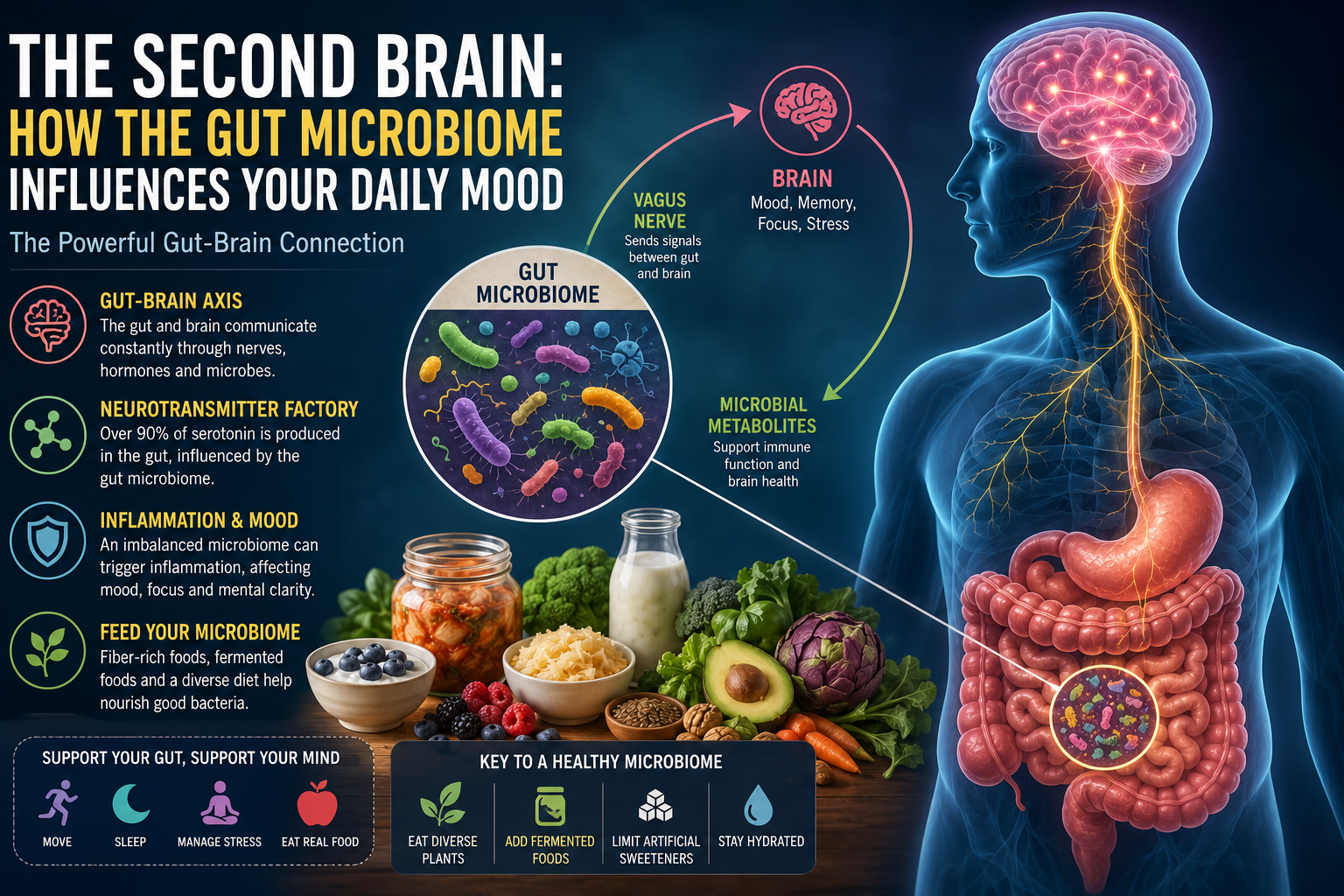
The gut microbiome is one of the most fascinating systems in the human body, influencing far more than digestion. Made up of trillions of microorganisms living throughout the digestive tract, the gut microbiome communicates with the nervous system and interacts with hormones, immune signals, and neurotransmitters. This connection between the gut and brain is often called the gut-brain axis, and it may help explain why digestive health and emotional well-being can sometimes feel closely connected.
Have you ever experienced butterflies in your stomach before an important presentation, felt nauseous during a stressful situation, or noticed changes in your appetite when you were worried? These experiences demonstrate how closely the brain and digestive system communicate.
The relationship is much more complex than simply having “good” or “bad” bacteria. Your gut microbiome is a constantly changing ecosystem influenced by diet, sleep, stress, physical activity, medications, age, and lifestyle. Researchers are increasingly studying how this ecosystem may influence mood, cognition, stress responses, and overall health.
What Is the Gut Microbiome?
The gut microbiome refers to the community of microorganisms that live in the gastrointestinal tract. These microorganisms include bacteria, viruses, fungi, and other microscopic organisms. Together, they form a complex ecosystem that performs important functions throughout the body.
The gut microbiome helps break down components of food that the human digestive system cannot completely process on its own. In the process, gut microorganisms produce compounds that can interact with intestinal cells, immune cells, and the nervous system.
A diverse and balanced gut microbiome is generally considered an important part of digestive and metabolic health. However, scientists are still discovering exactly how individual microbial species and their metabolites affect different aspects of human health.
The Gut-Brain Axis and the Gut Microbiome
The gut-brain axis describes the two-way communication network connecting the gastrointestinal system and the brain. The gut microbiome is an important part of this communication system.
Signals can travel between the gut and brain through several pathways. These include the vagus nerve, immune system, hormones, microbial metabolites, and chemical signals produced within the digestive tract.
The Gut-Brain Connection
The relationship between the gut microbiome and the brain can be understood as a continuous communication network. Signals move between the digestive system and brain, while gut microorganisms influence the environment in which many of these signals occur.
                 🧠 THE BRAIN
                     ↕
              Mood • Stress
              Memory • Focus
                     ↕
              ┌─────────────┐
              │  VAGUS NERVE │
              └─────────────┘
                     ↕
        ┌────────────────────────┐
        │    GUT-BRAIN AXIS      │
        └────────────────────────┘
                     ↕
          🦠 GUT MICROBIOME
       ┌────────┬────────┬────────┐
       │ Fiber  │ Healthy│ Microbial│
       │ Foods  │ Diet   │ Diversity│
       └────────┴────────┴────────┘
                     ↓
          SHORT-CHAIN FATTY ACIDS
                     ↓
        ┌────────────────────────┐
        │  INTESTINAL & IMMUNE   │
        │       SIGNALS          │
        └────────────────────────┘
                     ↓
          🌿 DIGESTIVE HEALTH
                     ↕
             😊 DAILY MOOD
The gut-brain axis illustrates how the gut microbiome, digestive system, nervous system, immune pathways, and brain communicate with one another.
This connection does not mean that the gut directly controls a person’s emotions. Instead, it demonstrates that the gut microbiome is part of a much larger biological network that may influence processes associated with mood and well-being.
How the Vagus Nerve Connects the Gut and Brain
The vagus nerve is one of the major communication pathways between the digestive system and the brain. It carries information in both directions, allowing the brain to respond to signals originating in the gut.
This communication helps explain why emotional stress can affect digestion and why changes in the digestive system may influence how a person feels.
The gut microbiome can influence some of these signals by producing metabolites that interact with cells in the intestinal environment. This makes the microbiome an important area of research in understanding the gut-brain connection.
The Gut Microbiome and Neurotransmitters
Neurotransmitters are chemical messengers involved in communication between nerve cells. Serotonin, dopamine, and other signaling molecules are commonly discussed in relation to mood and emotional regulation.
Interestingly, a large proportion of the body’s serotonin is produced outside the brain, particularly by specialized cells in the gastrointestinal tract. However, this does not mean that gut bacteria directly produce most of the body’s serotonin.
Instead, the gut microbiome can influence the intestinal environment and may affect pathways involved in serotonin production and signaling. This distinction is important because the relationship between gut microorganisms and mood is more complicated than simply saying that gut bacteria “make happiness chemicals.”
Serotonin and the Gut Microbiome
Serotonin plays important roles in digestion as well as communication within the nervous system. Much of the body’s serotonin is found in the gastrointestinal tract, where it contributes to intestinal movement and other digestive processes.
Research suggests that gut microorganisms can interact with cells involved in serotonin production. This means the gut microbiome may indirectly participate in pathways associated with serotonin and the gut-brain axis.
The science is still developing, so the gut microbiome should not be viewed as a simple switch that controls happiness or sadness.
Gut Microbiome, Inflammation, and Mood
Another important area of research is the relationship between the gut microbiome, the immune system, and inflammation.
The intestinal environment contains a large portion of the body’s immune activity. Gut microorganisms interact continuously with immune cells and help shape the body’s immune responses.
When the intestinal ecosystem becomes disrupted, researchers are investigating whether changes in microbial composition and intestinal function may contribute to inflammatory processes. Because inflammation can communicate with the brain, scientists are exploring whether these pathways could influence mood and cognitive function.
This does not mean that every digestive problem causes anxiety or depression. Mental health is influenced by many biological, psychological, environmental, and social factors. The gut microbiome is one part of a much larger system.
What Is Microbiome Diversity?
A healthy gut microbiome is not necessarily defined by having one specific “best” bacterium. Instead, researchers often pay attention to microbial diversity and the overall function of the ecosystem.
Different microorganisms perform different roles. Some help break down dietary fibers, while others produce metabolites that can interact with intestinal cells.
A varied diet containing many types of plant foods can provide different forms of fiber and other compounds that can interact with the gut microbiome.
The 30-Plant Approach
One popular dietary idea associated with microbiome diversity is aiming to consume around 30 different plant foods across a week. This concept emphasizes variety rather than eating the same few fruits and vegetables repeatedly.
Plant foods can include vegetables, fruits, beans, lentils, whole grains, nuts, seeds, herbs, and spices.
The goal is not to treat 30 as a magical number. Rather, the idea is to encourage dietary diversity because different plant foods contain different types of fibers and compounds that can interact with the gut microbiome.
Prebiotic Fiber and the Gut Microbiome
Prebiotics are dietary components, particularly certain types of fiber, that can be used by beneficial microorganisms in the gut.
When gut microbes ferment certain fibers, they can produce short-chain fatty acids such as acetate, propionate, and butyrate. These compounds are important research targets because they interact with intestinal cells, immune pathways, and metabolism.
A diet rich in diverse plant foods can provide many sources of fermentable fiber for the gut microbiome.
Foods such as beans, lentils, oats, barley, vegetables, fruits, nuts, and seeds can contribute to overall fiber intake.
Short-Chain Fatty Acids and Gut Health
Short-chain fatty acids are among the most studied products of microbial fermentation. Butyrate, for example, is an important energy source for certain cells lining the colon.
These microbial metabolites may also influence immune activity and other biological pathways. Scientists are continuing to investigate whether these mechanisms help explain associations between the gut microbiome and brain health.
Fermented Foods and the Gut Microbiome
Fermented foods are another popular part of discussions about the gut microbiome. Foods such as yogurt containing live cultures, kefir, kimchi, and sauerkraut can contain microorganisms produced during fermentation.
Some fermented foods may introduce live microorganisms into the digestive system, although their effects can vary depending on the food, preparation method, storage, and individual digestive health.
Rather than treating fermented foods as a guaranteed way to “reset” the microbiome, it is more useful to include them as part of an overall varied and nutritious diet.
Artificial Sweeteners and the Gut Microbiome
Artificial sweeteners have also attracted attention in microbiome research. Some studies suggest that certain non-nutritive sweeteners may influence the composition or activity of gut microorganisms in some people.
However, responses can vary significantly between individuals, and research is still evolving. It would be an oversimplification to conclude that every artificial sweetener damages the gut microbiome.
A balanced approach is to consider overall dietary patterns rather than focusing on one ingredient in isolation.
Stress and the Gut Microbiome
The relationship between stress and the gut microbiome works in both directions.
Stress can influence digestion, appetite, intestinal movement, and other gastrointestinal processes. At the same time, signals originating in the gut can communicate with the nervous system.
This two-way relationship is one reason some people notice digestive changes during periods of intense stress. Maintaining healthy lifestyle habits may therefore benefit both digestive and emotional well-being.
Sleep and the Gut Microbiome
Sleep is another important factor connected with the body’s biological rhythms. Poor or irregular sleep can affect appetite, metabolism, stress hormones, and daily routines.
Researchers are also investigating relationships between sleep patterns and the gut microbiome. Although the exact mechanisms are still being studied, maintaining a consistent sleep schedule may support overall health and a stable daily routine.
How to Support a Healthy Gut Microbiome
Supporting the gut microbiome does not require an expensive supplement routine or an extreme diet. Everyday habits can provide a strong foundation for digestive health.
A varied diet rich in vegetables, fruits, legumes, whole grains, nuts, and seeds can increase exposure to different types of dietary fiber. Regular physical activity, adequate sleep, stress management, and avoiding unnecessary use of medications can also contribute to overall health.
It is also important to remember that individual responses differ. A food that works well for one person may cause discomfort for another.
Gut Microbiome: The Second Brain Explained
The phrase “second brain” is often used to describe the extensive nervous system located in the digestive tract, known as the enteric nervous system. It contains a large network of neurons that helps regulate digestion.
The enteric nervous system and the gut microbiome are not the same thing. The enteric nervous system consists of nerve cells, while the gut microbiome consists of microorganisms.
However, they exist within the same environment and participate in a complex communication network involving the gut, immune system, microbial metabolites, and brain.
This is why the gut-brain connection has become such an important area of modern biological research.
Building a Healthier Gut Microbiome Naturally
The best approach to supporting the gut microbiome is usually a consistent, balanced lifestyle rather than a quick fix.
Eating a wide variety of plant foods can provide different fibers for microbial fermentation. Including suitable fermented foods can add another source of dietary diversity. Regular movement can support metabolic and digestive health, while quality sleep helps maintain healthy biological rhythms.
Stress management is also important because the brain and digestive system constantly communicate with each other.
There is no single food that can instantly transform the gut microbiome. Instead, long-term dietary variety and healthy habits are more realistic strategies for supporting a resilient digestive ecosystem.
The Future of Gut Microbiome Research
Scientists are still learning how individual microorganisms interact with one another and with the human body. Future research may help explain why the same food or lifestyle change can produce different effects in different people.
Researchers are also studying whether personalized nutrition could eventually use information about an individual’s gut microbiome to provide more tailored dietary recommendations.
However, microbiome science is still developing. Many claims circulating online are stronger than the current evidence supports, particularly claims promising to completely “heal” mental health conditions through diet alone.
The most reliable approach is to view the gut microbiome as one important component of overall health rather than a single explanation for mood or mental well-being.
Conclusion: The Gut Microbiome Is More Than Digestion
The gut microbiome is a complex ecosystem that plays important roles in digestion, metabolism, immune function, and communication between the gut and brain. Through microbial metabolites, immune pathways, and interactions with the nervous system, the microbiome may influence processes connected with mood and overall well-being.
The idea of the gut as a “second brain” highlights just how closely connected different systems of the body really are. While research has not yet uncovered every detail of this relationship, one message is becoming increasingly clear: taking care of your digestive health can be an important part of taking care of your overall health.
A diverse diet, adequate fiber, quality sleep, regular movement, and a balanced lifestyle provide a practical foundation for supporting the gut microbiome and the wider gut-brain connection.