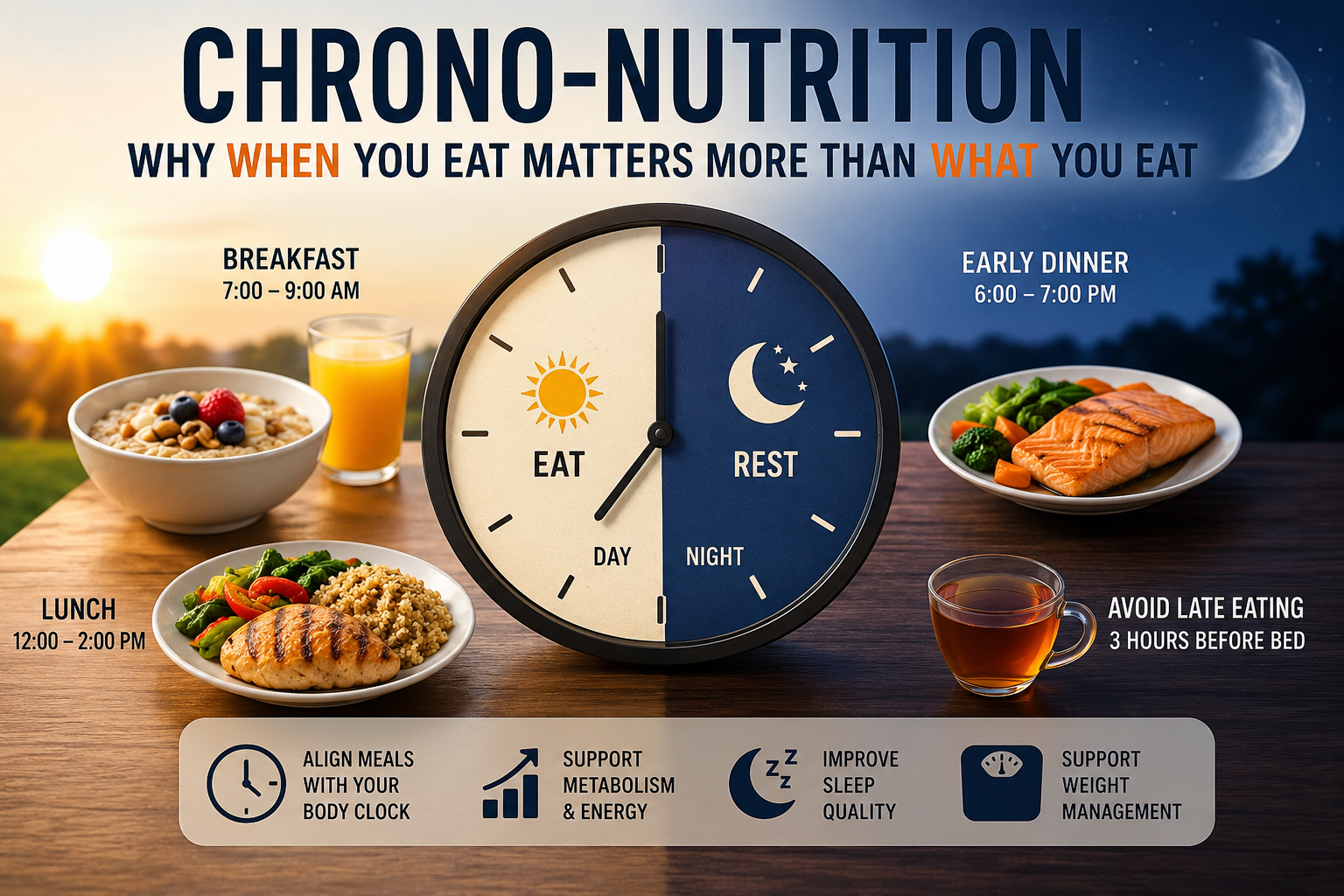
Chrono-nutrition is changing how we understand healthy eating. Traditional nutrition often focuses on calories, protein, carbohydrates, fats, and food quality. While these factors remain important, chrono-nutrition adds another important question: When should you eat?
Our bodies follow a natural 24-hour rhythm known as the circadian rhythm. This internal clock influences sleep, hormones, digestion, metabolism, body temperature, and energy levels. Because metabolism changes throughout the day, meal timing may influence how efficiently the body processes food.
What Is Chrono-Nutrition?
Chrono-nutrition is the study of how meal timing interacts with the body’s circadian rhythm. Instead of looking only at what is on your plate, it considers when food enters your body.
Your liver, pancreas, digestive system, muscles, and other tissues have biological clocks that help coordinate metabolic processes. These clocks work together with the brain’s central clock to maintain a healthy daily rhythm.
When eating patterns consistently conflict with the body’s natural clock, metabolic processes may become less efficient. This is one reason researchers are increasingly interested in chrono-nutrition, meal timing, and metabolic health.
Chrono-Nutrition and the Circadian Rhythm
The circadian rhythm follows a roughly 24-hour cycle and responds strongly to light and darkness. During the day, the body generally becomes more prepared for activity, digestion, and nutrient processing. At night, the body gradually shifts toward rest and recovery.
This means the same meal may not produce exactly the same metabolic response at different times of the day.
How Meal Timing Affects Insulin
Insulin helps move glucose from the bloodstream into cells where it can be used for energy. Insulin sensitivity can vary throughout the day, which is an important concept in chrono-nutrition.
After waking, the body becomes increasingly active and prepared to handle nutrients. As the evening progresses, metabolic activity changes as the body prepares for sleep.
For example, a carbohydrate-rich meal may be processed differently in the morning compared with a similar meal consumed very late at night. However, individual responses can vary, and meal composition, physical activity, sleep, and overall diet also matter.
The Midnight Snack and Chrono-Nutrition
Late-night eating is one of the most discussed areas of chrono-nutrition. Eating close to bedtime can conflict with the body’s normal transition toward sleep.
Late meals may also be associated with poorer sleep quality, increased total calorie intake, and less favorable metabolic responses. This does not mean that one late-night meal automatically causes metabolic problems. Researchers are more interested in the effects of repeated eating patterns over time.
The important lesson is that food quality and meal timing should be considered together rather than separately.
How to Build a Chrono-Nutrition Eating Pattern
A practical chrono-nutrition approach does not require extreme fasting or complicated rules. Instead, it focuses on creating a consistent eating schedule that works with your daily routine.
Start Your Eating Window Earlier
Many people naturally eat their largest meals later in the day. A chrono-nutrition approach generally encourages shifting more food toward the earlier part of the day when practical.
Breakfast and lunch can provide substantial nutrition, while dinner can be lighter and eaten earlier when possible.
Finish Dinner Before Bedtime
One useful strategy is avoiding large meals immediately before sleep. Finishing dinner several hours before bedtime may give digestion time to settle and may support better sleep.
The exact timing does not need to be identical for everyone. Work schedules, exercise, family routines, and individual needs all influence the best eating pattern.
Keep Your Meal Schedule Consistent
Consistency is another important part of healthy meal timing. Frequently changing meal times can make it harder to maintain a stable daily rhythm.
A regular schedule can help your body anticipate when food will arrive and coordinate digestion and metabolism accordingly.
Chrono-Nutrition: Earlier Meals vs. Late Meals
| Eating Pattern | Possible Effect | Practical Consideration |
|---|---|---|
| Earlier breakfast | Supports daytime metabolism | Choose a balanced meal |
| Substantial lunch | Provides energy during active hours | Include protein and fiber |
| Early dinner | Gives more time before sleep | Keep portions comfortable |
| Late-night meal | May conflict with nighttime rhythms | Avoid large meals close to bedtime |
| Irregular meal timing | May disrupt consistent patterns | Aim for a predictable routine |
Chrono-Nutrition and Weight Management
Chrono-nutrition may also have implications for weight management. Meal timing can influence hunger, energy intake, glucose regulation, and daily eating patterns.
However, meal timing should not be viewed as more important than overall food quality or calorie intake in every situation. A nutritious diet, appropriate energy intake, physical activity, and adequate sleep remain fundamental.
The value of chrono-nutrition is that it adds another layer to healthy eating by considering food intake alongside the body’s biological timing.
Chrono-Nutrition and Sleep
Eating very close to bedtime can sometimes interfere with comfortable sleep, particularly when meals are large, heavy, or spicy. Digestion continues after eating while the body is simultaneously preparing for nighttime rest.
A consistent eating schedule may therefore support a clearer separation between eating and sleeping.
Good sleep is also important for appetite regulation and metabolic health, creating a close relationship between sleep and chrono-nutrition.
Why Chrono-Nutrition Matters
The biggest idea behind chrono-nutrition is simple: your body responds to food within the context of time.
Instead of asking only, “What did I eat today?” it can also be useful to ask, “When did I eat it, and how does that timing fit my body’s daily rhythm?”
This does not mean that eating a healthy meal at the “wrong” time suddenly makes it unhealthy. Nutrition is complex, and individual needs differ. Nevertheless, research into circadian biology suggests that meal timing deserves more attention.
A Smarter Approach to Chrono-Nutrition
A practical chrono-nutrition routine can focus on consistency, sensible meal timing, and avoiding large meals immediately before sleep when possible.
Rather than following rigid rules, use meal timing as a framework for understanding your body’s relationship with food and time. Chrono-nutrition does not replace healthy food choices; instead, it adds another perspective to a balanced approach to nutrition.