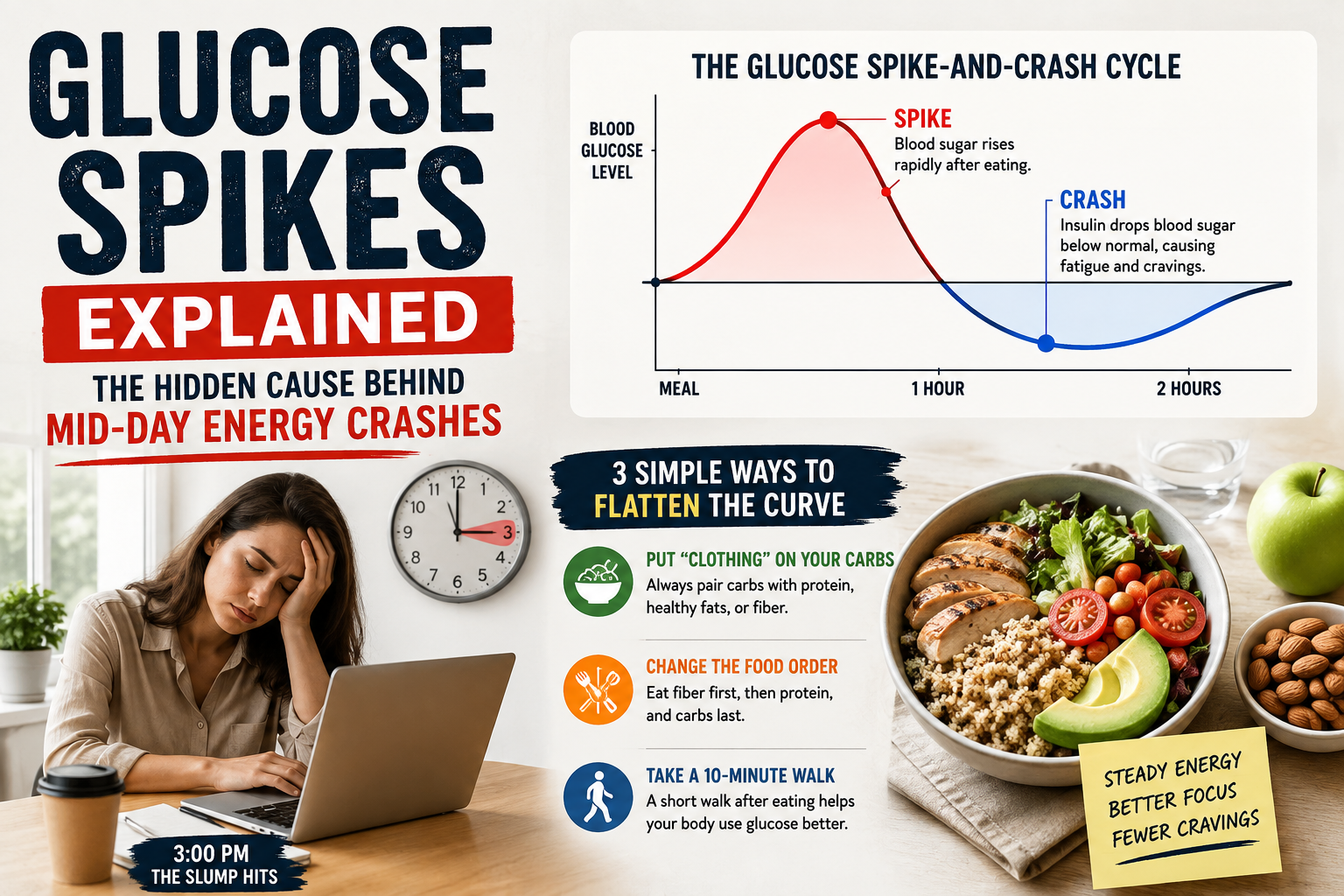
It’s 3:00 PM. You are staring at your computer screen, your eyelids feel heavy, and your focus has almost disappeared. You may immediately reach for coffee, chocolate, or a sugary snack to feel energetic again. One possible reason behind this familiar afternoon slump is Glucose Spikes. When blood glucose rises quickly after eating and then falls, some people may experience tiredness, hunger, irritability, or difficulty concentrating.
Food affects the body in many different ways, and energy levels are not determined by calories alone. The type of carbohydrates you eat, the amount of fiber and protein in your meal, physical activity, sleep, stress, and individual metabolism can all influence blood glucose. Understanding Glucose Spikes can help explain why certain meals leave you feeling energetic while others may leave you feeling tired a few hours later.
What Are Glucose Spikes?
Glucose Spikes are rapid increases in blood glucose that can happen after eating, particularly after consuming foods that contain easily digested carbohydrates. Sugary drinks, sweets, refined grains, pastries, and highly processed carbohydrate-rich foods can be digested relatively quickly, allowing glucose to enter the bloodstream rapidly.
When blood glucose rises, the pancreas releases insulin. Insulin helps move glucose from the bloodstream into cells, where it can be used for energy or stored for later use. This is a normal process and an essential part of human metabolism.
The concern is not that blood glucose increases after eating. A rise in glucose after a meal is completely normal. The more important issue is the size and speed of the increase and how frequently these large fluctuations occur.
How Glucose Spikes Can Cause an Energy Crash
The connection between Glucose Spikes and an afternoon energy crash is often described as a spike-and-crash cycle. After a meal containing rapidly digested carbohydrates, blood glucose can rise quickly. The body responds by releasing insulin to help bring glucose back toward its normal range.
For some people, a rapid decline afterward may be associated with fatigue, hunger, shakiness, irritability, or difficulty concentrating. However, not every afternoon energy crash is caused by blood glucose. Poor sleep, dehydration, stress, inactivity, a large meal, and normal changes in alertness during the afternoon can also contribute to tiredness.
The Glucose Spikes Cycle
The basic process can be represented as:
Fast-Digesting Carbohydrates → Glucose Rise → Insulin Response → Glucose Decline → Possible Fatigue or Hunger
The exact response differs between individuals. Two people can eat the same meal and experience different glucose patterns because metabolism, physical activity, sleep, genetics, and other factors can influence blood glucose.
Glucose Spikes and Daily Energy
Your daily energy levels can be influenced by the way your body processes meals. A meal dominated by refined carbohydrates may provide quickly available energy but may not keep you satisfied for a long time.
Adding protein, fiber, and healthy fats can make meals more balanced and may slow digestion. This can help create a more gradual release of glucose instead of a very rapid increase.
For example, eating an apple by itself is different from eating an apple with a small portion of nuts. The combination of carbohydrate, fiber, protein, and fat may create a different digestive and metabolic response.
This does not mean carbohydrates should be avoided. Fruits, beans, lentils, oats, and whole grains contain valuable carbohydrates and can be part of a healthy diet.
How Food Order May Reduce Glucose Spikes
The order in which you eat different parts of a meal may also influence the post-meal glucose response. Research has explored whether eating vegetables or other fiber-rich foods before protein and carbohydrates can reduce the speed of glucose absorption.
Fiber can slow digestion and increase feelings of fullness. Protein and fat can also influence gastric emptying. As a result, beginning a meal with vegetables or another fiber-rich food may help create a more gradual glucose response.
Food order is not a magical solution, but it can be a simple strategy to consider alongside a balanced diet.
A Simple Approach to Glucose Spikes
A balanced meal can include vegetables, a protein source, healthy fats, and an appropriate portion of carbohydrates. This combination provides a variety of nutrients and may help avoid extremely rapid digestion of carbohydrate-rich foods.
The goal is not to completely eliminate carbohydrates. Instead, choosing higher-fiber carbohydrate sources and combining them with other nutritious foods can support a more balanced eating pattern.
The Role of Fiber, Protein, and Healthy Fats
Fiber is one of the most important dietary factors when discussing Glucose Spikes. High-fiber foods generally take longer to digest than refined carbohydrates, and some types of fiber can slow the movement of glucose into the bloodstream.
Vegetables, beans, lentils, oats, whole grains, fruits, nuts, and seeds can all contribute to daily fiber intake. Protein-rich foods such as eggs, fish, chicken, yogurt, beans, and lentils can also make meals more satisfying.
Healthy fats from foods such as nuts, seeds, olive oil, and avocado can be included as part of a balanced meal. Together, these foods can create meals that are more nutritionally complete than meals based primarily on refined carbohydrates.
Comparing Foods and Glucose Spikes
| Meal Pattern | Glucose Response | Potential Energy Experience |
|---|---|---|
| Sugary drink alone | Often rapid | Short-term energy followed by hunger |
| Pastry alone | Often rapid | May be followed by tiredness |
| Fruit alone | Varies | Depends on fruit and portion |
| Fruit with nuts | More balanced | May provide greater fullness |
| Vegetables + protein + whole grains | More gradual | May support steadier energy |
| Fiber-rich meal + protein | More gradual | May help with sustained fullness |
These are general patterns rather than guarantees. Individual responses to food can vary significantly.
The 10-Minute Walk After a Meal
Physical activity can be another useful strategy for managing post-meal glucose. When muscles contract during walking, they can take up glucose from the bloodstream. This process can occur through pathways that do not rely entirely on insulin.
A short walk after eating may therefore help reduce the rise in blood glucose for some people. The walk does not need to be intense. A relaxed walk around your home, workplace, or neighborhood can provide useful movement after a meal.
Movement and Glucose Spikes
Many modern lifestyles involve sitting for long periods, especially after lunch. Breaking up long periods of sitting with light movement can support overall physical activity.
A short post-meal walk may also help make your daily routine more active. Combined with balanced meals, regular movement can be a practical part of supporting metabolic health.
Glucose Spikes and the Afternoon Slump
The afternoon slump can have several causes. Your body’s natural circadian rhythm can influence alertness during the day, while poor sleep can make normal afternoon tiredness feel much stronger.
A large lunch dominated by refined carbohydrates may add to feelings of sluggishness in some people. If the meal is also low in protein and fiber, hunger may return sooner.
This is why Glucose Spikes can be useful to understand, but they should not be considered the only explanation for afternoon fatigue.
Simple Glucose Spikes Graph
Blood
Glucose
  │
  │              /\
  │             /  \
  │            /    \
  │           /      \____
  │      ____/             \__
  │_____/                     \____
  │
  └──────────────────────────────────
       Meal       1 hr       2 hr
              Time After Eating

        Rapid rise → Rapid decline
A more gradual response can look more like this:
Blood
Glucose
  │
  │           ______
  │         /        \
  │       /            \
  │______/              \____
  │
  └────────────────────────────────
       Meal       1 hr       2 hr
              Time After Eating

        Gradual rise → Gradual decline
These graphs are simplified illustrations. Real glucose responses can be much more complex and vary from person to person.
Foods That May Increase Glucose Spikes
Foods containing large amounts of added sugar or refined carbohydrates can produce faster increases in blood glucose. Sugary beverages are particularly easy to consume quickly because they contain little or no fiber and require minimal digestion.
Pastries, candy, sweet desserts, white bread, and many highly processed snacks can also cause relatively rapid glucose increases in some people.
This does not mean these foods must be completely avoided. Portion size, frequency, overall dietary quality, physical activity, and individual metabolic health all matter.
Whole Foods for More Balanced Energy
Replacing some refined carbohydrates with higher-fiber foods can be a practical way to support better nutrition and potentially reduce large Glucose Spikes.
A meal containing vegetables, grilled chicken or beans, and a portion of whole grains is generally more balanced than a meal consisting mostly of refined bread and a sugary drink.
The goal is not perfection. Sustainable changes that can be maintained over time are generally more realistic than highly restrictive diets.
Glucose Spikes, Sleep, and Stress
Blood glucose is influenced by more than food. Sleep and stress can also affect metabolic regulation.
Poor sleep can influence appetite, food choices, and insulin sensitivity. Stress can affect hormones involved in glucose regulation and may also increase cravings for highly processed or sugary foods.
This means that managing Glucose Spikes should not focus only on food. Good sleep, regular movement, adequate hydration, and stress management can all support overall metabolic health.
How to Reduce Glucose Spikes Naturally
Reducing Glucose Spikes does not require eliminating carbohydrates or following an extreme diet. A sustainable approach is to build balanced meals containing fiber-rich foods, protein, healthy fats, and appropriate portions of carbohydrates.
Eating vegetables, legumes, whole grains, fruits, nuts, and seeds can increase dietary fiber. Pairing carbohydrates with protein or healthy fats can also change how quickly a meal is digested.
Taking a short walk after eating is another simple habit that may support post-meal glucose control. Maintaining a regular sleep schedule and staying physically active can further support healthy metabolism.
The Future of Glucose Spikes Research
Technology is changing how researchers understand Glucose Spikes. Continuous glucose monitors and other wearable technologies are making it easier to observe how blood glucose changes throughout the day.
Researchers are also exploring personalized nutrition. In the future, information about an individual’s metabolism, lifestyle, activity, and food responses may help create more personalized dietary recommendations.
However, glucose science is still developing. Not every glucose increase is harmful, and not everyone needs to monitor blood glucose continuously. People with diabetes or other metabolic conditions should follow advice from qualified healthcare professionals.
Final Thoughts on Glucose Spikes
Glucose Spikes are an important concept for understanding the relationship between food, metabolism, and daily energy. Rapid changes in blood glucose may contribute to hunger or fatigue in some situations, but afternoon tiredness can also have many other causes.
A balanced diet containing fiber-rich foods, protein, healthy fats, and minimally processed carbohydrates can provide a strong nutritional foundation. Combining these habits with regular movement, adequate sleep, hydration, and stress management can support more consistent energy.
The goal is not to fear every rise in blood glucose. Instead, understanding Glucose Spikes can help you make more informed food and lifestyle choices while focusing on sustainable habits that support long-term metabolic health.