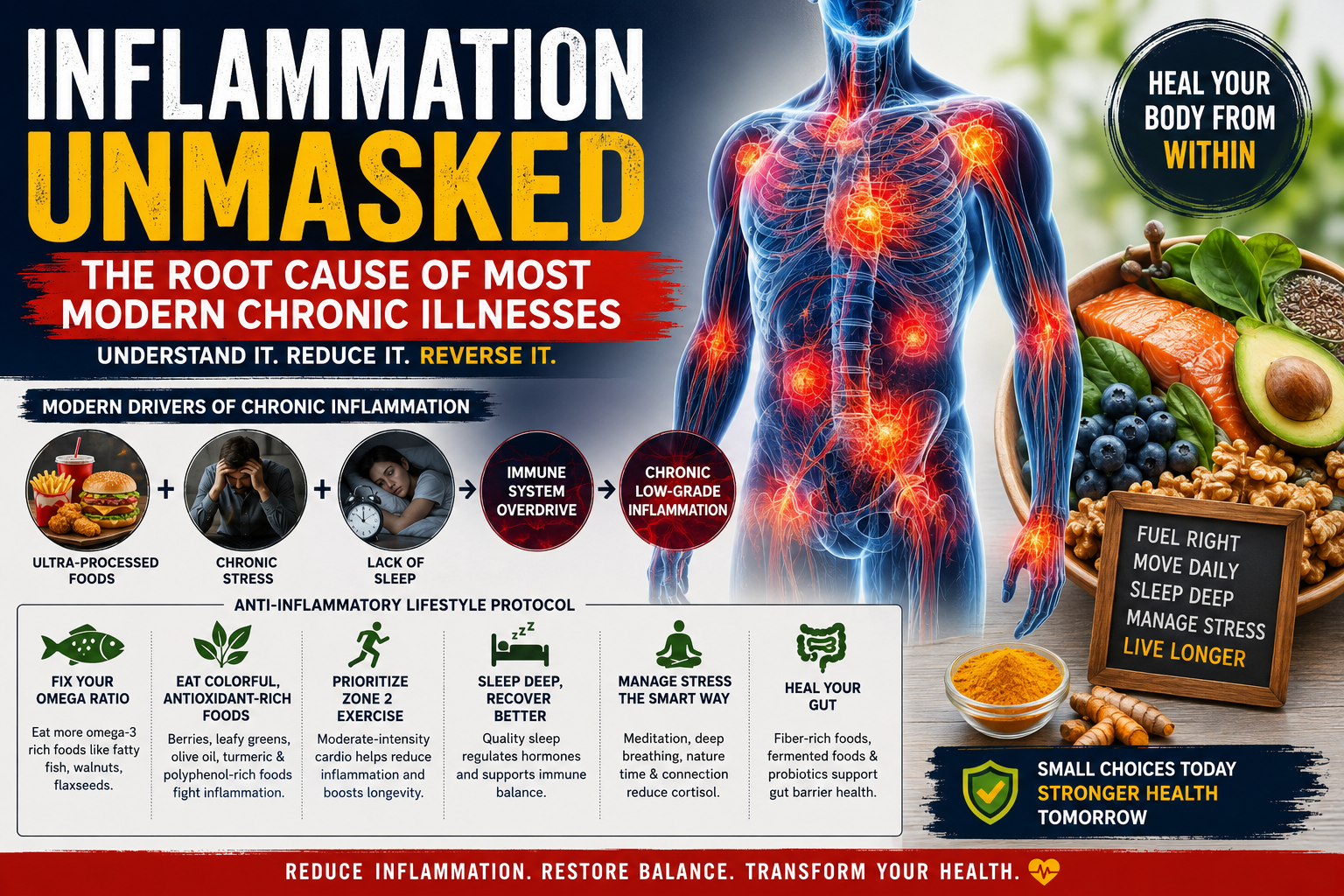
When you stub your toe or scrape your knee, you witness acute inflammation in action. The area may become red, swollen, warm, and painful as your immune system sends resources to begin the healing process. But when inflammation continues for too long, it can become a very different biological problem. Inflammation Unmasked helps explain why understanding chronic inflammation has become increasingly important for modern health and disease prevention.
Unlike short-term inflammation, chronic low-grade inflammation can remain active for months or years without producing obvious symptoms. It is associated with several long-term health conditions, including cardiovascular disease, metabolic disorders, and some forms of cognitive decline. Understanding the lifestyle factors that influence inflammation can therefore be an important part of a broader approach to healthy living.
Inflammation Unmasked: 7 Powerful Facts About Chronic Inflammation
Inflammation is not inherently bad. In fact, your immune system depends on it. When your body detects an injury or infection, immune cells release signaling molecules that help coordinate the healing response.
The problem begins when inflammatory signaling remains elevated even after the original trigger has disappeared. This prolonged response can place additional stress on tissues and may contribute to changes in metabolic, cardiovascular, and immune function.
This is where Inflammation Unmasked becomes particularly useful. Instead of viewing inflammation as something that only happens after an injury, it can be understood as part of a complex relationship between nutrition, sleep, physical activity, stress, environmental exposure, and overall health.
Inflammation Unmasked: The Powerful Difference Between Acute and Chronic Inflammation
Acute inflammation is generally rapid and temporary. If you cut your finger, your immune system responds quickly to protect the damaged area. Once the threat is controlled and healing begins, the inflammatory response should gradually decrease.
Chronic inflammation works differently. It may develop gradually and remain relatively subtle. A person might not feel a specific symptom that can immediately be blamed on inflammation, yet long-term inflammatory processes can still interact with other systems throughout the body.
This distinction is essential because the goal is not to eliminate inflammation. Eliminating the body’s inflammatory response would also interfere with normal immune defense and tissue repair. The healthier goal is to support an appropriate inflammatory response and reduce unnecessary long-term triggers.
Inflammation Unmasked: 7 Major Lifestyle Factors That Matter
Modern lifestyles can expose the body to multiple factors that influence inflammatory pathways. Diet quality, physical inactivity, inadequate sleep, chronic psychological stress, smoking, excessive alcohol consumption, and excess body fat can all play roles in overall inflammatory health.
Ultra-processed foods are particularly relevant because diets high in refined carbohydrates, added sugars, unhealthy fats, and excess calories may contribute to metabolic dysfunction. At the same time, diets rich in vegetables, fruits, whole grains, legumes, nuts, seeds, and other minimally processed foods generally provide nutrients and compounds associated with better overall health.
Inflammation Unmasked: The Role of Nutrition
Food does not simply provide calories. It supplies vitamins, minerals, fiber, fatty acids, and plant compounds that interact with metabolic and immune processes.
A diet dominated by highly processed foods can make it more difficult to maintain healthy metabolic function, particularly when it contributes to excess calorie intake and weight gain. In contrast, a varied diet containing colorful vegetables, berries, legumes, whole grains, nuts, seeds, and fish can provide nutrients that support normal physiological processes.
Omega-3 fatty acids found in foods such as fatty fish, walnuts, and certain seeds are also important components of a balanced diet. Rather than focusing on eliminating one specific ingredient, a more useful strategy is to improve the overall quality and variety of the diet.
Inflammation Unmasked: The Gut Connection
The digestive system and immune system are closely connected. A large portion of the body’s immune activity is associated with tissues surrounding the gastrointestinal tract.
The gut microbiome, consisting of trillions of microorganisms, interacts with food, digestion, metabolism, and immune signaling. Dietary fiber from vegetables, fruits, legumes, and whole grains can support beneficial microbial activity.
When dietary patterns are consistently poor, the balance and function of the gut microbiome may change. This does not mean that every digestive problem is caused by inflammation, but it demonstrates why gut health is increasingly considered an important part of overall metabolic and immune health.
Inflammation Unmasked: Why Sleep Is a Critical Factor
Sleep is one of the most underestimated components of a healthy inflammatory balance.
During sleep, the body performs important regulatory and restorative functions. Regularly sleeping too little or experiencing poor-quality sleep can affect stress hormones, glucose regulation, appetite, immune signaling, and cardiovascular function.
A person may focus heavily on supplements or complicated wellness routines while overlooking a basic issue: consistently insufficient sleep.
A regular sleep schedule, a comfortable sleeping environment, reduced evening screen exposure, and adequate time in bed can provide a stronger foundation for health than many complicated interventions.
Inflammation Unmasked: Chronic Stress and the Cortisol Connection
Psychological stress is another factor that deserves attention. Short periods of stress are normal and can help the body respond to challenges. Problems may arise when stress becomes persistent and recovery opportunities become limited.
The stress response involves hormones and nervous-system activity that prepare the body for action. When this system is repeatedly activated without sufficient recovery, it can influence sleep, appetite, blood glucose regulation, blood pressure, and immune function.
This does not mean cortisol is inherently harmful. Cortisol is essential for normal physiology. The important issue is maintaining a healthy stress-response pattern rather than trying to eliminate the hormone.
Practices such as regular physical activity, sufficient sleep, social connection, relaxation techniques, and structured breaks can help create more opportunities for recovery.
7 Powerful Lifestyle Factors and Their Potential Impact
| Lifestyle Factor | Possible Influence on Health | Better Strategy |
|---|---|---|
| Highly processed diet | May contribute to metabolic dysfunction | Choose more minimally processed foods |
| Poor sleep | Can affect immune and metabolic regulation | Maintain a consistent sleep routine |
| Chronic stress | May disrupt normal stress-response systems | Build regular recovery periods |
| Physical inactivity | Can negatively affect metabolic health | Move regularly throughout the day |
| Excess body fat | Associated with inflammatory signaling | Focus on sustainable healthy habits |
| Low-fiber diet | May reduce support for beneficial gut microbes | Increase vegetables, legumes, fruits, and whole grains |
| Smoking | Strongly harms cardiovascular and respiratory health | Avoid tobacco exposure |
Inflammation Unmasked: The Powerful Role of Exercise
Exercise is one of the most effective lifestyle tools for supporting overall metabolic health.
Regular physical activity improves cardiovascular fitness, insulin sensitivity, muscle function, and energy regulation. It can also help people maintain a healthy body composition, which is relevant because excess adipose tissue can influence inflammatory signaling.
You do not need extreme workouts to benefit. Walking, cycling, swimming, resistance training, and moderate aerobic exercise can all contribute to a healthier lifestyle.
A combination of strength training and cardiovascular activity can be particularly useful because it supports both muscle health and cardiovascular fitness.
Inflammation Unmasked: Why Daily Movement Matters
A common mistake is assuming that a single workout completely offsets an otherwise sedentary day.
Someone might exercise for 45 minutes in the morning and then spend the remaining day sitting at a desk. Regular movement throughout the day can complement structured exercise.
Short walks, taking the stairs, standing periodically, household activities, and walking after meals can all contribute to daily physical activity.
The goal is not perfection. The goal is to make movement a consistent part of everyday life.
Inflammation Unmasked: The Importance of Healthy Body Composition
Body fat is not simply an energy-storage system. Adipose tissue also functions as an active endocrine organ and can release signaling molecules that influence metabolism and immune activity.
Excess visceral fat, particularly fat stored around internal organs, is associated with metabolic dysfunction and increased health risks.
This does not mean that body weight alone determines health. Genetics, muscle mass, fitness, diet quality, sleep, and many other factors matter as well.
A sustainable approach focuses on improving overall health rather than pursuing extreme weight-loss methods.
Inflammation Unmasked: 7 Powerful Foods for a Balanced Diet
A healthy dietary pattern does not require expensive superfoods. Everyday foods can provide many of the nutrients needed for a balanced lifestyle.
Vegetables provide fiber, vitamins, minerals, and plant compounds. Berries and other fruits provide antioxidants and additional fiber. Legumes offer plant protein and fermentable fiber. Nuts and seeds provide healthy fats and minerals.
Fatty fish such as salmon, sardines, and mackerel provide omega-3 fatty acids. Extra-virgin olive oil can also fit into a heart-healthy eating pattern.
The most important factor is the overall dietary pattern rather than one individual food.
A Simple Inflammation Health Graph
The following simplified graph illustrates how several healthy lifestyle habits can work together. It is conceptual rather than a clinical measurement:
Healthy Lifestyle FactorsWhole-Food Nutrition ████████████████████Regular Movement ██████████████████Quality Sleep █████████████████Stress Management ████████████████Healthy Body Composition ███████████████Avoiding Tobacco ███████████████████ ↓Better Overall Metabolic & Immune Health
This should not be interpreted as showing exact percentages or proving that one habit directly reduces inflammation by a specific amount. Instead, it demonstrates the bigger idea: health outcomes are influenced by multiple interconnected behaviors.
Inflammation Unmasked: What About Supplements?
The supplement industry often markets individual products as powerful solutions for inflammation. Some nutrients and compounds have been studied for their biological effects, but supplements should not replace a healthy lifestyle.
A person who sleeps poorly, rarely exercises, and eats a highly processed diet is unlikely to solve those underlying problems with a single capsule.
Food quality, movement, sleep, stress management, and medical care should form the foundation. Supplements may have a role in specific situations, particularly when a healthcare professional identifies a deficiency or another clear reason for their use.
Inflammation Unmasked: The Most Powerful Long-Term Strategy
The most effective approach to managing health is rarely based on one dramatic change. Instead, it comes from repeatedly practicing small behaviors that support the body’s normal systems.
A balanced diet can become a daily habit. Walking can become part of your routine. Strength training can protect muscle and physical independence. Consistent sleep can support recovery. Stress-management practices can create regular periods of relaxation.
Over time, these habits can work together.
The real power of Inflammation Unmasked is understanding that chronic inflammation is not an isolated topic. It connects nutrition, metabolism, sleep, exercise, stress, and lifestyle into one larger picture of health.
Conclusion: Inflammation Unmasked for a Healthier Future
Inflammation Unmasked reveals an important distinction between the inflammation your body needs and the prolonged inflammatory activity that can accompany chronic disease risk.
Acute inflammation is a valuable defense mechanism that helps the body respond to injury and infection. Chronic inflammation, however, is associated with numerous long-term health conditions and can be influenced by lifestyle, metabolic health, environmental factors, and genetics.
There is no single food, supplement, workout, or trick that can guarantee protection from chronic disease. A more powerful strategy is to build a lifestyle around nutritious foods, regular movement, adequate sleep, effective stress management, and appropriate medical care.
By understanding the science behind inflammation and making sustainable choices, you can create a stronger foundation for long-term health and wellness.