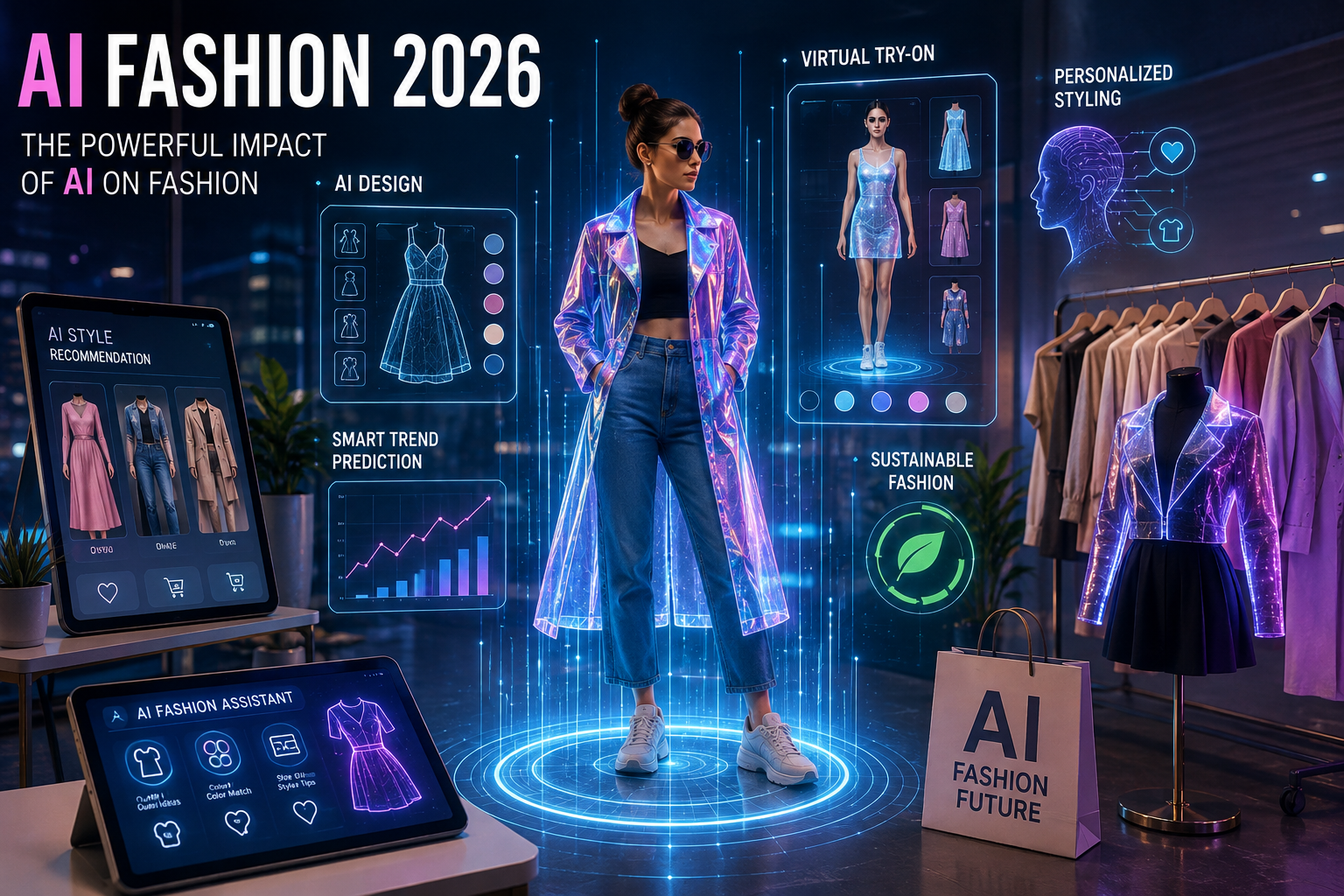
AI Fashion 2026 is changing the way people discover, design, buy, and wear clothing. Artificial intelligence is moving beyond chatbots and image generators and entering everyday style decisions. Brands can study customer preferences, designers can explore concepts faster, and shoppers can preview outfits before purchasing. This shift is creating a fashion experience where technology supports creativity, personalization, and smarter shopping.
Table of Contents
- What Is AI Fashion 2026?
- How AI Fashion 2026 Is Transforming Fashion Design
- AI Fashion 2026 and Virtual Try-On Technology
- Personalized Style With AI Fashion
- AI Fashion 2026 and Smart Trend Prediction
- How AI Fashion 2026 Is Changing Online Shopping
- AI Fashion and Sustainable Fashion
- Challenges and Concerns of AI Fashion 2026
- AI-powered fashion in 2026 and the Future of Fashion
- Final Thoughts
What Is AI Fashion 2026?
AI Fashion 2026 describes the growing use of artificial intelligence across clothing design, retail, styling, trend research, and customer experiences. Instead of depending only on traditional research, fashion businesses can use AI to recognize patterns in images, product data, searches, customer behavior, and style preferences.
The important change is not simply that computers can create clothing images. AI can connect different parts of the fashion journey. A shopper’s preferences can influence recommendations, a designer can test concepts digitally, and a retailer can use demand signals to plan inventory more carefully.
This makes AI useful for large fashion companies as well as smaller online brands. A small store can use intelligent tools to organize products, improve descriptions, suggest outfits, and understand which styles are gaining attention.
How AI Fashion 2026 Is Transforming Fashion Design
Fashion design depends on creativity, experimentation, and knowledge of materials. AI adds another layer by helping designers explore more possibilities in less time.
A designer can describe a mood, color palette, fabric type, or clothing shape and generate several visual concepts. Those concepts can then be refined by a human designer. AI becomes a brainstorming partner rather than the final decision-maker.
AI can compare combinations of colors, patterns, cuts, and accessories during the early concept stage. Designers can explore more directions before producing physical samples, which may save time and resources.
The strongest approach combines machine speed with human judgment. AI can produce possibilities quickly, but designers decide whether an idea is practical, attractive, original, and suitable for a particular audience.
AI Fashion 2026 and Virtual Try-On Technology
Virtual try-on is one of the most visible developments in modern fashion technology. Online shoppers often hesitate because they cannot see how clothing may look on their own body. AI-powered virtual try-on attempts to reduce that uncertainty.
A shopper may upload a photo and select a garment. The system can create a visual preview showing how the clothing could appear. More advanced systems can account for body shape, pose, garment details, and realistic fabric appearance.
AI Fashion 2026 could make virtual fitting rooms a normal part of online shopping. Instead of guessing about an outfit, shoppers may compare several looks on a digital representation of themselves.
This could also help reduce unnecessary returns. When customers have a clearer visual reference before ordering, they may feel more confident about their choices.
Virtual try-on still has limits. Lighting, camera angles, body position, garment structure, and image quality can affect the result. A digital preview should therefore be treated as a useful guide rather than a guarantee of exact physical fit.
Personalized Style With AI Fashion
Personalization is another major opportunity. Traditional online stores often recommend products using broad categories such as previous purchases or popular items. AI can build a deeper understanding of individual style.
A digital fashion assistant could learn that someone prefers neutral colors, relaxed clothing, minimalist designs, or certain brands. It could then recommend complete outfits rather than unrelated products.
AI Fashion 2026 may make personal styling available to people who would never hire a professional stylist. A digital assistant could suggest clothing for work, travel, events, casual days, or different seasons.
Future tools may also understand a person’s existing wardrobe. Users could upload pictures of their clothes and receive outfit combinations using items they already own. This could save time and potentially reduce unnecessary shopping.
AI Fashion 2026 and Smart Trend Prediction
Fashion trends can move quickly. A style that looks minor today can become popular after gaining attention through social platforms, entertainment, search behavior, and online communities.
AI can analyze large amounts of information faster than people can. It can identify repeated colors, shapes, patterns, materials, and styling themes across many sources.
AI Fashion 2026 can help brands notice early signals before a trend becomes obvious. This may influence what designers create, what retailers stock, and what marketing teams promote.
Trend prediction is not perfect. Fashion is influenced by culture, emotions, celebrities, weather, economics, and unexpected events. AI can identify patterns, but human interpretation remains important.
Simple AI Fashion Trend Sketch
The following is an illustrative trend-adoption sketch, not official market data:
2026  ██████████             10
2027  ████████████           12
2028  ███████████████        15
2029  ██████████████████     18
2030  █████████████████████  21
The main idea is that as AI tools become easier to use, more fashion businesses may experiment with them across design, marketing, shopping, and customer service.
How AI Fashion 2026 Is Changing Online Shopping
Online fashion shopping has one major weakness: customers cannot physically touch or try products before buying them. AI is helping retailers create a more informative digital experience.
AI can recommend clothing based on style preferences, previous behavior, size information, and the purpose of a purchase. Someone searching for a wedding outfit could receive different suggestions from someone looking for everyday office clothing.
AI-generated visualization can also make shopping more interactive. Customers may be able to view different colors, styling combinations, or outfit ideas instead of seeing only one standard product image.
AI Fashion 2026 may also improve product search. A shopper could type “find me a simple summer outfit within my budget” instead of searching separately for shirts, trousers, and accessories.
Conversational shopping can make fashion websites easier to use, especially for people who know what they want but do not know the exact product terms used by retailers.
AI Fashion and Sustainable Clothing
Sustainability is another area where AI could create practical benefits. Fashion waste can occur when companies produce too many items, misjudge demand, or create samples that never reach the market.
AI can analyze demand signals and help businesses make more informed production decisions. Better forecasting could reduce the risk of producing large quantities of unwanted items.
AI-assisted digital design can also reduce some early physical sampling. Designers can test concepts on screens before choosing which ideas deserve physical development.
However, AI is not automatically sustainable. Computing systems require electricity and hardware, so the environmental benefit depends on how the technology is designed and operated.
AI Fashion 2026 will have greater value when it helps reduce waste, improve planning, and extend product usefulness rather than being used simply because it is fashionable.
Challenges and Concerns of AI Fashion 2026
The rapid growth of AI creates important questions for fashion. One concern is originality. If an AI system learns from a huge collection of existing visual styles, designers may question where inspiration ends and imitation begins.
Privacy is another issue. Virtual try-on and personalized styling can involve photographs, measurements, shopping history, and preference data. Companies need to explain how this information is collected, stored, and used.
There is also concern about employment. AI may automate some repetitive tasks, but fashion still depends heavily on creativity, craftsmanship, communication, and cultural understanding.
Brands also need to use generated content responsibly. If an AI image makes clothing appear dramatically different from the physical product, customers could feel misled.
Trust will become increasingly important. Good AI tools should help shoppers make better decisions rather than simply encouraging them to buy more.
AI Fashion 2026 and Human Creativity
Human creativity remains central because fashion is more than clothing. It communicates identity, culture, mood, and personal expression.
AI can generate options and analyze information, but people still provide meaning and taste. The most useful future may therefore be collaborative rather than completely automated.
The Future of AI Fashion 2026
The next stage could connect design, shopping, styling, and production into one intelligent ecosystem. A customer might describe an outfit, receive several concepts, choose a preferred style, preview it virtually, adjust colors, and find available products that match the idea.
AI Fashion 2026 could also become more connected with wearable technology. Clothing may increasingly interact with smartphones, augmented reality, digital identity systems, and other smart devices.
Another possible direction is digital fashion. Virtual clothing can be used in games, social platforms, avatars, digital events, and augmented reality. As online identity becomes more important, people may care about what their digital version wears as much as their physical wardrobe.
AI could also help smaller fashion brands compete by giving them access to tools for design exploration, customer support, personalized recommendations, and trend research without requiring huge teams.
Final Thoughts on AI Fashion 2026
AI Fashion 2026 is changing fashion from a product-focused industry into a more personalized and interactive experience. AI can support designers with faster concept development, help shoppers visualize clothing, improve recommendations, identify emerging trends, and support smarter inventory decisions.
The technology still has limitations. Privacy, originality, accuracy, sustainability, and responsible use will all matter as AI becomes more deeply connected with fashion.
The future of clothing will probably not be controlled entirely by machines. Instead, AI will become another creative and practical tool used by designers, brands, retailers, and shoppers. The strongest results will come when artificial intelligence provides speed and insight while human creativity provides taste, identity, and purpose.