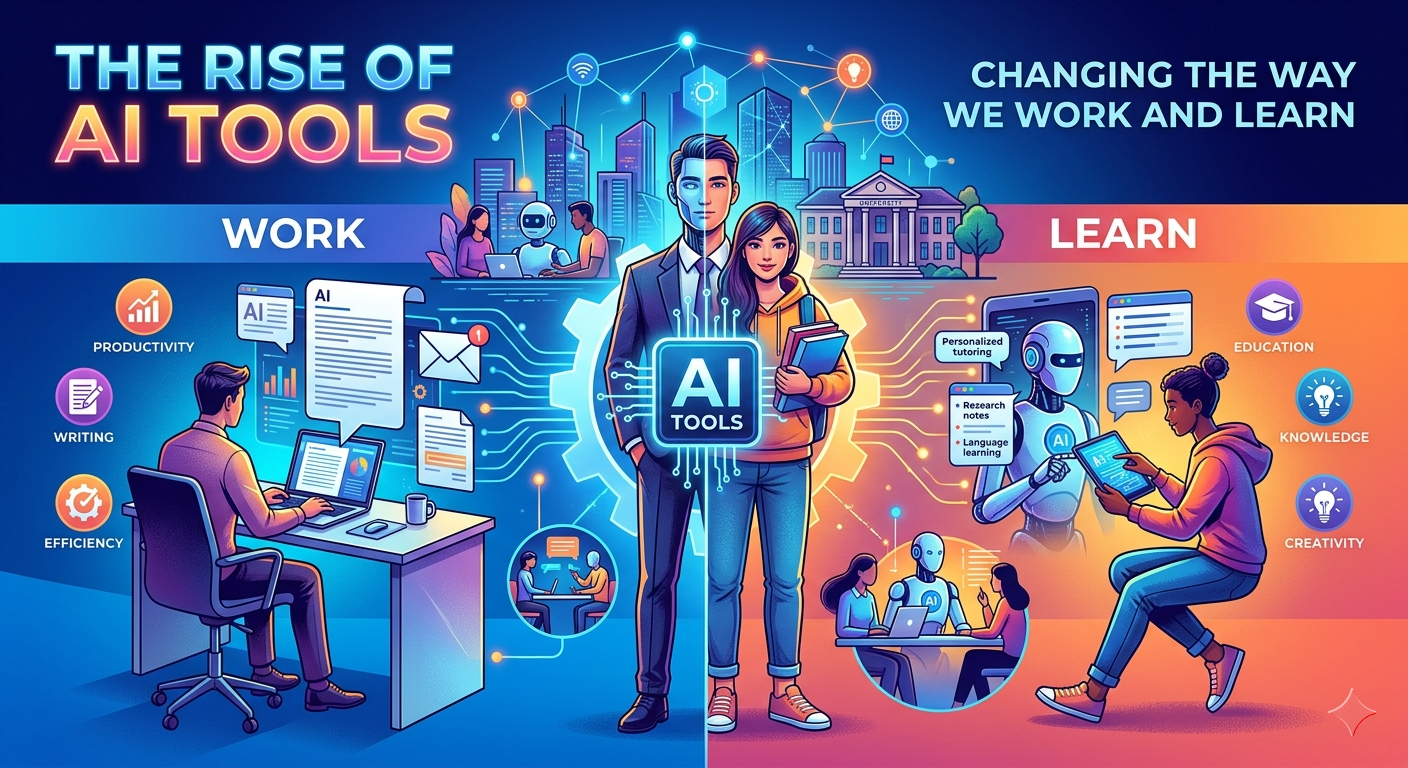
The Rise of AI Tools: How They’re Changing the Way We Work and Learn
A few years ago, artificial intelligence sounded like something straight out of a science fiction movie. Today, it has quietly become a part of our everyday lives. From writing emails and generating images to helping students study and assisting businesses with customer service, AI tools are changing the way people work, learn, and create.
Whether you’re a student trying to save time on assignments, a freelancer managing multiple projects, or a business owner looking to improve efficiency, there’s likely an AI tool designed to make your life easier.
What Are AI Tools?
AI tools are software applications powered by artificial intelligence technologies such as machine learning and natural language processing. These tools can analyze information, recognize patterns, generate content, and automate tasks that once required significant human effort.
Unlike traditional software that follows fixed instructions, AI tools can adapt, learn from data, and provide more personalized experiences.
Why Are AI Tools Becoming So Popular?
The growing popularity of AI tools isn’t just about following a trend. People are embracing them because they solve real problems.
1. They Save Time
One of the biggest advantages of AI tools is their ability to automate repetitive tasks. Writing drafts, organizing schedules, summarizing lengthy documents, and analyzing data can now be done in minutes instead of hours.
2. They Improve Productivity
AI allows individuals and teams to focus on meaningful work while routine tasks are handled automatically. This leads to better efficiency and improved outcomes.
3. They Support Learning
Students can use AI-powered platforms to understand complex concepts, generate study notes, practice languages, and receive instant explanations. Learning becomes more accessible and personalized.
4. They Encourage Creativity
Designers, writers, marketers, and content creators use AI to brainstorm ideas, overcome creative blocks, and experiment with new approaches.
Popular Categories of AI Tools
The AI landscape is expanding rapidly. Here are some of the most widely used categories:
Writing Assistants
These tools help generate content ideas, improve grammar, rewrite sentences, and create drafts for blogs, emails, and reports.
Image Generation Tools
Artists and marketers can transform text prompts into visually appealing graphics, illustrations, and promotional materials.
Productivity Tools
AI-powered assistants manage calendars, organize tasks, summarize meetings, and streamline workflows.
Educational Tools
Students use AI applications for tutoring, research assistance, quiz preparation, and language learning.
Customer Support Solutions
Businesses rely on AI chatbots to answer common questions and provide support around the clock.
The Benefits of Using AI Responsibly
When used correctly, AI tools can become valuable partners rather than replacements for human skills.
Some key benefits include:
- Faster task completion
- Improved accuracy
- Increased accessibility
- Enhanced creativity
- Better decision-making through data analysis
- Reduced workload for repetitive tasks
However, it’s important to remember that AI works best when combined with human judgment and critical thinking.
Challenges and Ethical Considerations
Despite their advantages, AI tools are not perfect.
Users should be aware of potential concerns such as:
- Accuracy issues and misinformation
- Privacy and data security risks
- Overdependence on automated systems
- Bias in AI-generated outputs
- Questions about originality and intellectual property
Using AI responsibly means verifying information, protecting sensitive data, and maintaining transparency when appropriate.
The Future of AI Tools
Artificial intelligence is still evolving. In the coming years, AI tools are expected to become even more personalized, intuitive, and integrated into our daily routines.
Instead of replacing people, the most likely future involves collaboration between humans and AI. Those who learn how to use these technologies effectively will have a significant advantage in education, business, and professional growth.
Final Thoughts
AI tools are no longer optional technologies reserved for tech experts. They have become practical solutions that help millions of people save time, boost productivity, and unlock creativity.
The key isn’t to fear artificial intelligence or rely on it completely. It’s to understand its strengths, recognize its limitations, and use it wisely.
As AI continues to shape the digital world, embracing these tools thoughtfully can help individuals and businesses adapt, innovate, and thrive in an increasingly technology-driven future.