Introduction
Education has evolved significantly over the past decade, but the rise of artificial intelligence is creating some of the biggest changes yet. Schools, colleges, and online learning platforms are increasingly adopting AI-powered technologies to improve the way students learn and teachers teach.
From personalized learning experiences to automated administrative tasks, AI is reshaping the future of education. Rather than replacing teachers, these technologies are helping educators become more effective while giving students access to smarter learning opportunities.
In this article, we’ll explore how AI is changing education in 2026 and what this means for students, teachers, and institutions.
Personalized Learning Experiences
One of the greatest advantages of AI in education is personalization. Every student learns differently. Some understand concepts quickly, while others need additional support.
AI-powered learning systems can analyze a student’s performance and adapt lessons according to their strengths and weaknesses. This helps students learn at their own pace instead of following a one-size-fits-all approach.
Benefits:
- Customized study plans
- Adaptive learning paths
- Better understanding of difficult subjects
- Improved academic outcomes
Smarter Classrooms
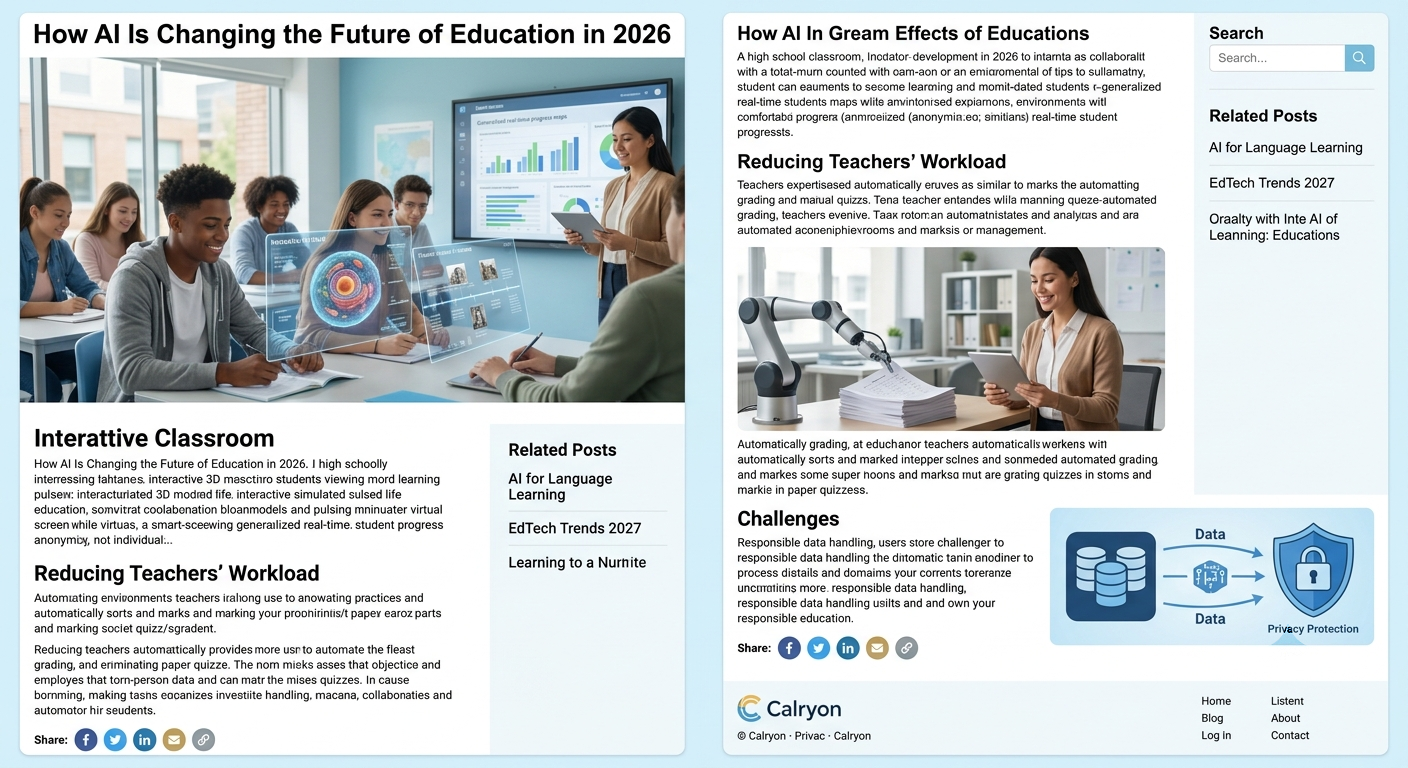
Traditional classrooms are becoming smarter with the integration of AI technologies.
Teachers can now use intelligent systems to track attendance, monitor progress, and identify students who may require extra assistance.
Interactive learning platforms also increase student participation and engagement.
Examples Include:
- Smart attendance systems
- Interactive whiteboards
- AI-powered educational platforms
- Real-time performance monitoring
Reducing Teachers’ Workload
Teachers spend a considerable amount of time grading assignments, preparing materials, and handling administrative tasks.
AI can automate many of these repetitive responsibilities, allowing educators to focus more on teaching and supporting students.
Tasks AI Can Assist With:
- Grading quizzes
- Creating assessments
- Organizing lesson plans
- Managing classroom records
Better Access to Education
AI has the potential to make quality education accessible to students regardless of their location.
Online learning platforms powered by AI can provide educational resources to learners in remote areas who may not have access to experienced teachers.
Language translation tools also help break communication barriers.
Advantages:
- Learning from anywhere
- Multilingual support
- Affordable educational resources
- Equal learning opportunities
Instant Learning Support
Students often have questions outside classroom hours.
AI-powered assistants provide instant explanations and guidance whenever learners need help.
This promotes independent learning and encourages curiosity.
Key Benefits:
- 24/7 assistance
- Immediate feedback
- Enhanced problem-solving skills
- Increased confidence
Challenges of AI in Education
Despite its advantages, AI also presents challenges that educational institutions must address.
Privacy concerns, data security, and excessive dependence on technology remain important considerations.
Human interaction continues to play an essential role in education that technology cannot replace.
Concerns Include:
- Student data protection
- Ethical use of AI
- Digital inequality
- Maintaining critical thinking skills
What Does the Future Look Like?
As technology continues to advance, AI will become an even more integrated part of education.
Future classrooms may offer highly personalized learning experiences, intelligent tutoring systems, and more efficient teaching environments.
However, the best results will come from balancing technological innovation with human guidance.
Final Thoughts
Artificial intelligence is transforming education in remarkable ways. It is helping students learn more effectively, enabling teachers to save time, and making educational opportunities more accessible.
While challenges still exist, the future of education appears increasingly connected with AI-driven innovation. Schools and learners who embrace these changes responsibly will be better prepared for the demands of tomorrow’s world.